Isla Solitaria and Lago Argentino: What You See from the Waterfront and Nobody Tells You
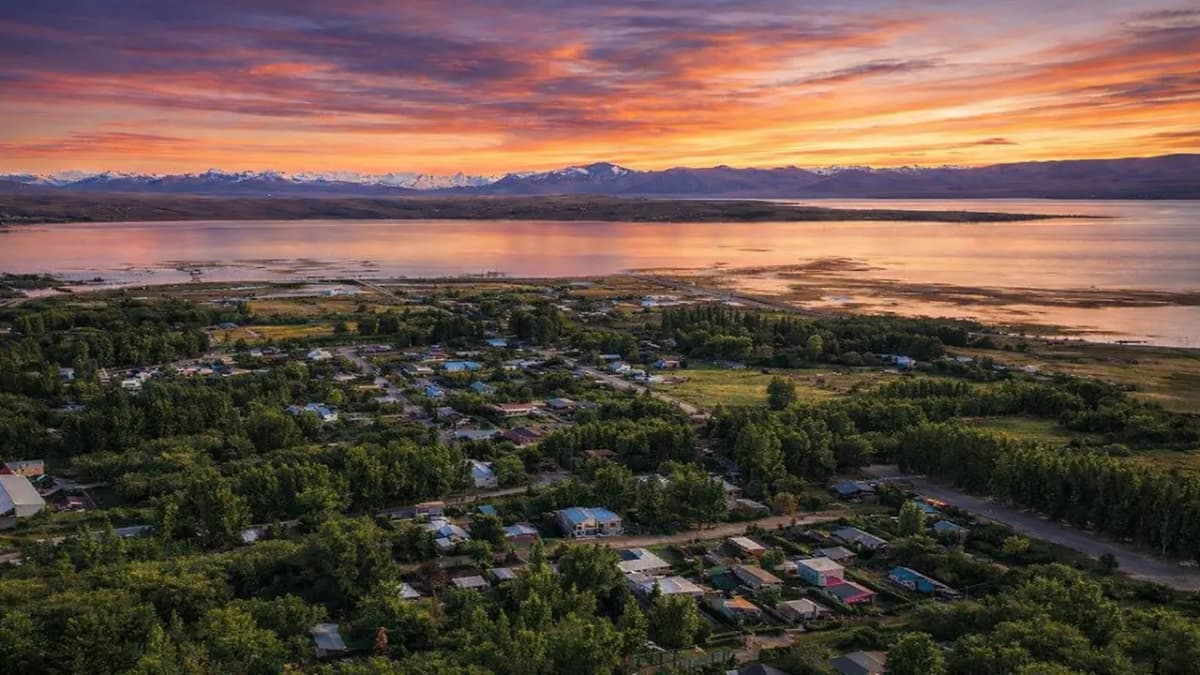
If you have walked along El Calafate's waterfront at sunset — or simply looked out the hotel window toward the lake — you surely noticed a small dark promontory rising from the middle of the turquoise water. It sits there, alone, silent, as if placed on purpose to break the monotony of the largest mirror in Argentina.
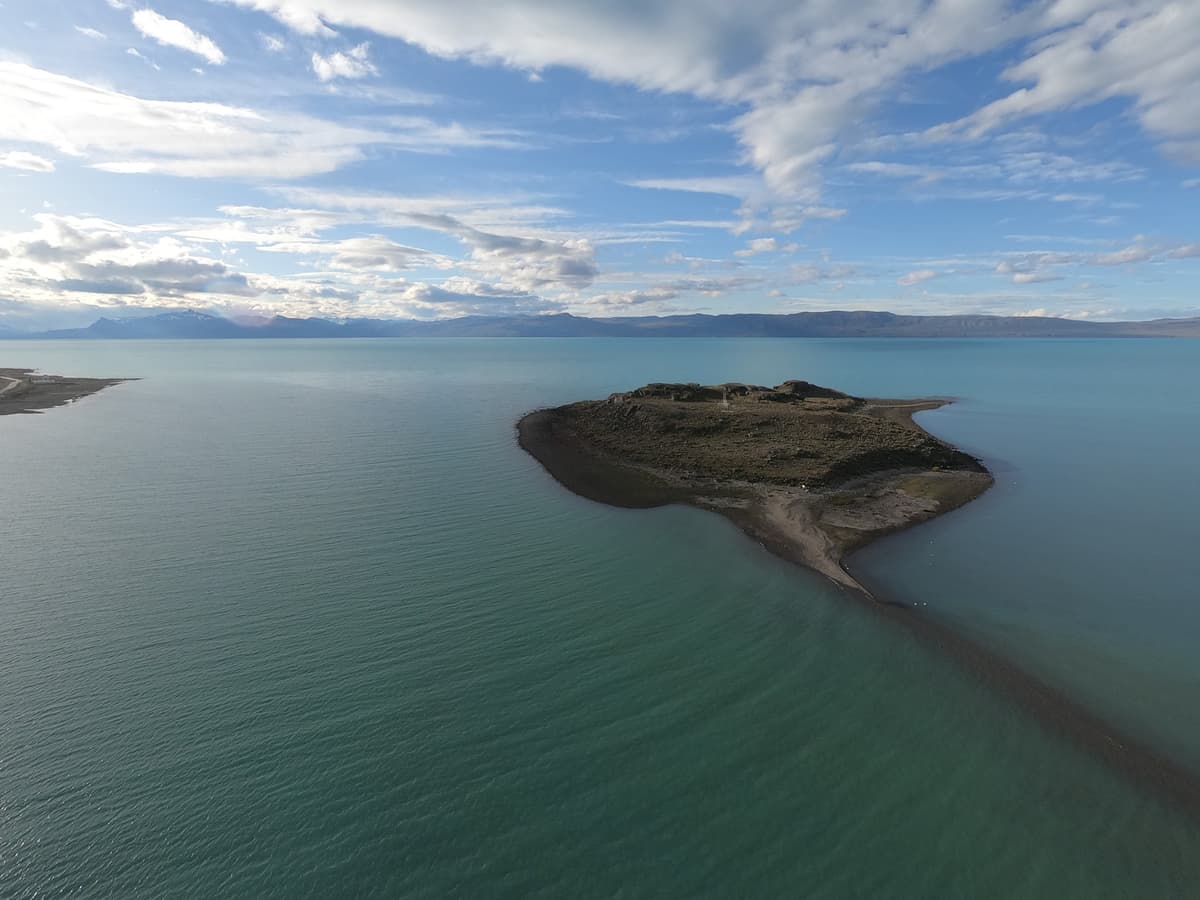
That rocky islet has a name: Isla Solitaria. And it has a much richer history than its minimalist appearance suggests: an abandoned dock, a fallen cross, an extreme swimming competition now in its seventh edition, and a bill that seeks to protect it forever.
But before talking about the island, let's talk about the giant that surrounds it.
Lago Argentino: The Giant That Feeds Everything
Lago Argentino is not just the largest lake in the country — it is one of the most impressive freshwater bodies on the planet. Some numbers to put it in perspective:
| Fact | Value |
|---|---|
| Surface area | 1,415 km² (larger than the City of Buenos Aires ×5) |
| Average depth | 150 meters |
| Maximum depth | ~500 meters (one of the deepest in the world) |
| Altitude | 178 meters above sea level |
| Color | Glacial turquoise (from suspended rock particles, called "glacial milk") |
| Source | Glaciers of the Southern Patagonian Ice Field |
That turquoise color that makes El Calafate photos so famous is not an Instagram filter. It is the result of millions of microparticles of rock ground by glaciers that remain suspended in the water and refract light. It is called glacial flour, and it gives Lago Argentino a tone you won't find in any other lake in Argentina.
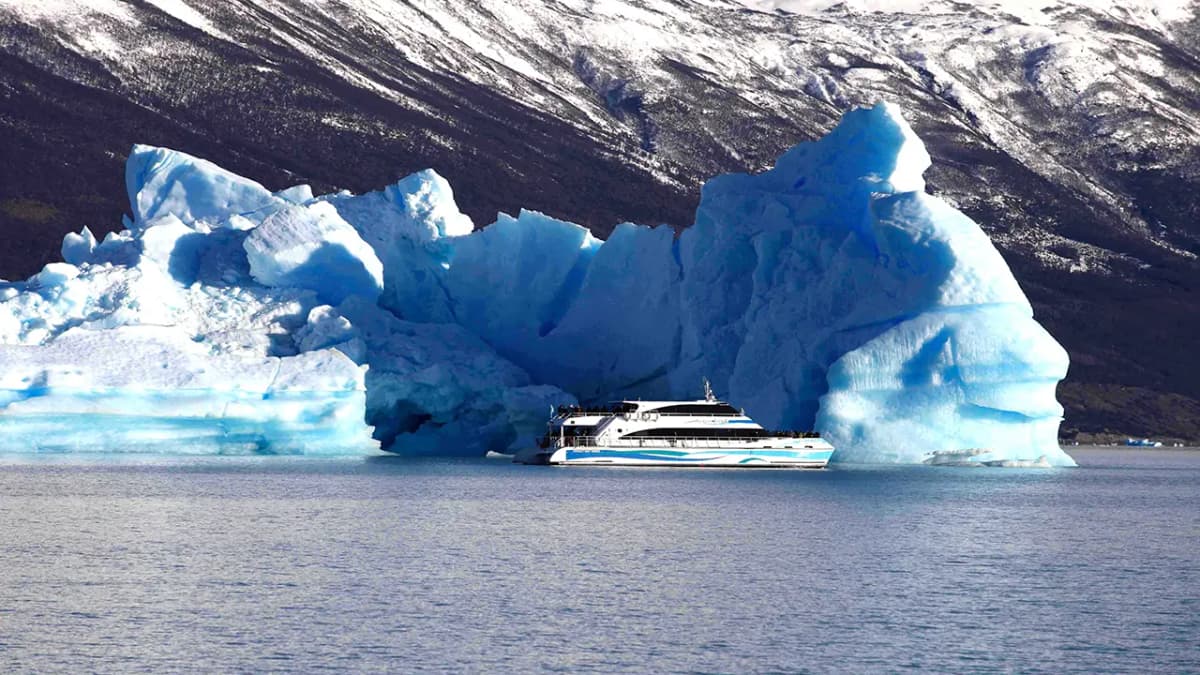
The lake branches into several arms that penetrate toward the Andes. The best known are the Brazo Rico and Brazo Sur (where the Perito Moreno Glacier is) and the Brazo Norte (where boats navigate to reach the Upsala and Spegazzini glaciers on the Todo Glaciares and Glaciares Gourmet excursions). Each arm has its own personality: the Rico is narrower and sheltered, the Norte is open and windy, and the Sur is where the famous ruptures of the Perito Moreno occur.
But there is one area of the lake that most tourists completely overlook: Bahía Redonda, the section that directly borders El Calafate. And it is there, at the boundary between the bay and the main body of the lake, where she appears.
Isla Solitaria: 10 Hectares Resisting the Giant
Isla Solitaria is a rocky outcrop of just over 10 hectares that emerges between Bahía Redonda and the main body of Lago Argentino. Seen from El Calafate's waterfront, it looks like a simple dark rock. But that modest appearance hides a history that blends exploration, abandonment, extreme sport, and conservation.
The perfect location
The island is not in the middle of nowhere — it is surprisingly close to town. From El Calafate's coastal promenade (near Laguna Nimez) you can see it with the naked eye. This makes it an iconic element of Calafate's urban landscape: always there, changing color with the time of day and the light.
Its position at the edge of Bahía Redonda makes it sensitive to changes in the lake level. And here comes the most interesting part.
When the lake retreats and the island connects
During periods of low water — when the level of Lago Argentino drops due to reduced glacial input or particular weather conditions — part of the Bahía Redonda lakebed becomes exposed. And something that seems unreal happens: you can walk to Isla Solitaria.
The bay floor emerges as a natural bridge of rock and sediment connecting the shore to the islet. It is a unique experience with no fixed schedule or season — it depends entirely on the water level. Locals know this and, when the water drops, they come to explore. For tourists, it is an almost total secret.
Important: This is not an organized or signposted walk. If the level drops and you want to cross, wear appropriate footwear, tell someone, and keep in mind that the lake can rise quickly. In 2023 a kayaker crossed to the island and disappeared on the return — Lago Argentino is not a gentle lake, especially when the wind picks up.
Vuelta a la Isla Solitaria: Extreme Swimming in Glacial Waters
Since 2020, the island has been the setting for a competition that gains more participants each year: the Vuelta a la Isla Solitaria, an open water swim held off El Calafate's waterfront.
In the seventh edition (2026), 83 swimmers took on the challenge of circling the rocky islet in waters fed directly by glaciers. The water temperature hovers around 6-8°C in the "warmest" months — we are talking about real extreme swimming, not a heated pool.
The competition has become a classic on the Patagonian sports calendar and puts El Calafate on the map for active tourism beyond the glaciers. For cold water swimmers around the world, it is one of the most southerly and challenging tests that exist.
You don't need to be a swimmer to enjoy it: from the waterfront you can watch the entire competition with the lake and mountains as a backdrop. If your trip coincides with the date, it is a free spectacle worth seeing.
A History of Abandonment and Protection
The relationship between Isla Solitaria and humans has not always been harmonious. A brief overview:
1991 — The Provincial Agrarian Council granted a precarious occupation permit with the obligation to carry out productive activity. The beneficiary did not comply and the permit was revoked.
1997 — The island was declared fiscal land and reserved for the Municipality of El Calafate for development plans.
2000s — A dock was built on the lakeshore and a vessel called "La Soberana I" was added to transport tourists to the island. Visitors walked a two-way trail that ended up causing significant environmental degradation.
2005 — The Provincial Agrarian Council declared Isla Solitaria a "Scientific Use Area Under Special Protection" and suspended tourist use, after verifying that the activity had not favored the conservation of the site.
Today — Remains of the rusted dock and a cross whose structure collapsed in 2011 are still there. The island is in a semi-wild state, visited only by wildlife — mainly birds — and by the swimmers who circle it once a year.
The bill
There is currently a bill in the Santa Cruz Legislature to elevate Isla Solitaria's status to a Protected Area under the designation of Natural Reserve. Legislator Jorge Arabel is promoting the initiative, which seeks to give the island a formal creation law to replace the 2005 administrative provision and guarantee its long-term protection against urban and tourist development.
It is a logical step: the island has a particular ecosystem, serves as a refuge for birds on Lago Argentino, and its location makes it vulnerable to any coastal development in Bahía Redonda.
How to See It and From Where
You don't need an excursion or a ticket to see Isla Solitaria. Here are the best options:
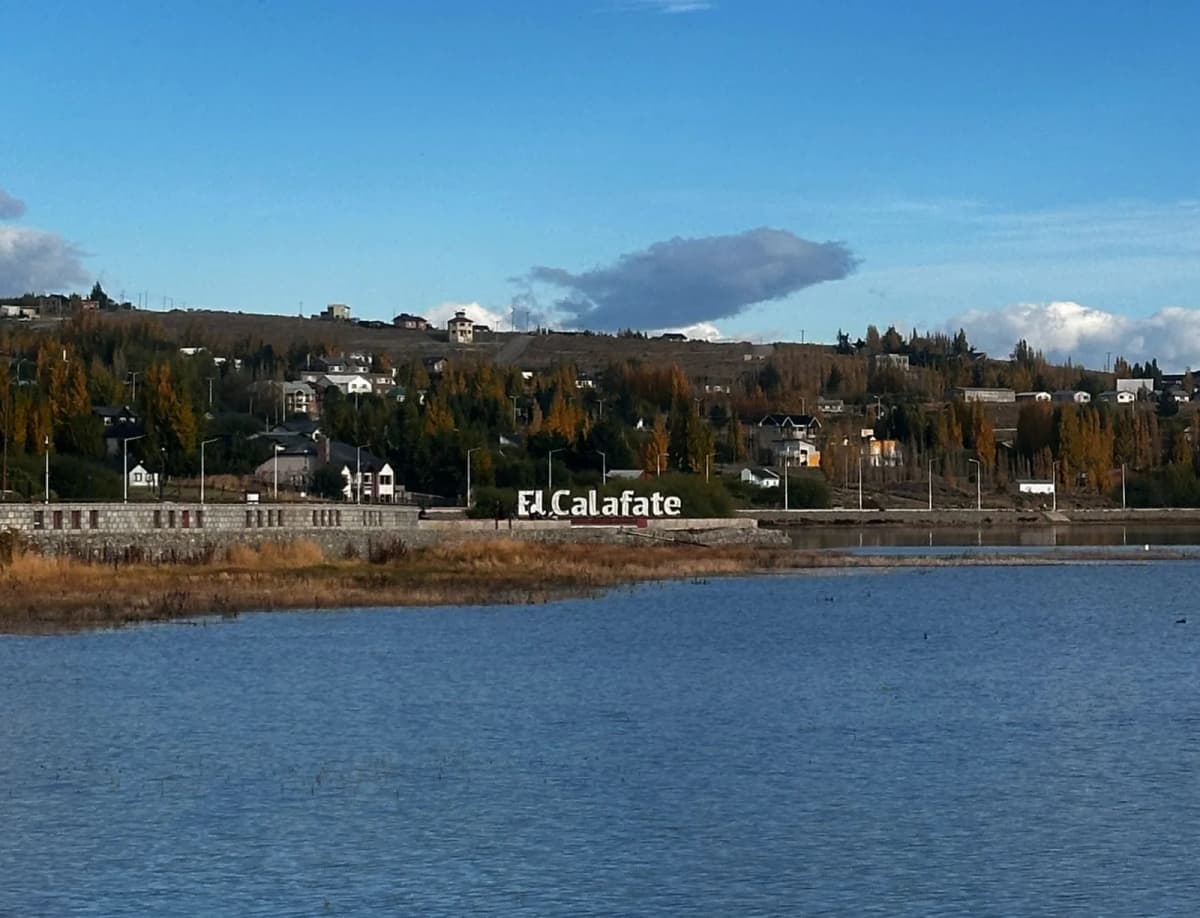
El Calafate Waterfront (Paseo de los Arrieros) — Walk along the waterfront from the center toward Laguna Nimez. The island is visible to the right, emerging from the lake. At sunset, the light gives it a golden tone over the turquoise water. It is one of the best spots to photograph it.
Laguna Nimez — From the bird reserve viewpoints, you get an elevated view of Bahía Redonda with the island in the middle. Plus, you can combine the visit with flamingo watching and over 80 bird species. The entrance fee is affordable (similar to the price of a coffee).
Cerro Calafate — If you hike up the hill (there is a free trail), from the top you get the complete perspective: the island, the bay, the lake, and the Andes in the background.
From the water — There is no tourist excursion to the island, but those who kayak from the waterfront pass close by. If you are interested in kayaking, there are local operators — ask us.
To fit this walk into your trip, check our 3-day itinerary in El Calafate: the waterfront and Laguna Nimez are perfect activities for an arrival day or a free afternoon.
A Fact Few People Know
The European explorers who reached this area in the 1860s were looking for a passage to the Pacific through Lago Argentino. They thought the lake extended westward until it connected with the ocean. Isla Solitaria was one of the first formations they spotted when venturing into these waters. Obviously the lake did not reach the Pacific — but the continental ice that feeds it does extend very close to the border with Chile.
That same sense of immensity that confused the explorers is what Lago Argentino still evokes when you look at it from the waterfront. And Isla Solitaria, right there in the middle, remains the same point of reference it has been for over 150 years.
Frequently Asked Questions
Preguntas Frecuentes
Resolvemos las dudas más comunes.
Want to discover more spots that don't appear in tourist guides? We are locals and we love showing what makes this place special beyond the glaciers. Explore our excursions or ask us anything via WhatsApp. To choose the best time and plan your trip, check our guide to the best time to visit El Calafate.