Current Conservation Status of Los Glaciares National Park
The Los Glaciares National Park is home to one of the largest expanses of continental ice outside the polar regions, including iconic glaciers such as the Perito Moreno, Upsala, Spegazzini and Viedma. This vast mass of ice is crucial not only as a natural and tourist attraction, but also as an important environmental regulator and source of fresh water for the region.
The Perito Moreno Glacier, Climate Change and the Beginning of Retreat
The Perito Moreno Glacier, One of the few glaciers in the world considered stable for decades, it is known for its natural cycle of advances and retreats, which create the phenomenon of its ice dam breaking off into Lake Argentino. However, recent studies have identified signs of retreat on its northern front, This suggests that even the most resilient glaciers are not immune to the effects of climate change.
Observed Impacts
1. Global Temperature and Glacier Retreat
- The sustained increase in global temperatures, particularly in the Patagonian region, has accelerated the melting of glaciers throughout the park.
- According to climate studies, the glaciers of Patagonia have experienced a significant loss of mass, with a a third of them reaching their maximum historical reduction.
2. Modification of the Northern Front
- Although the southern front of Perito Moreno still shows relatively stable patterns, the northern front It has begun to lose consistency, suggesting a gradual change in its internal dynamics.
3. Accelerated De-icing and Feedback
- The melting of the ice exposes darker surfaces (rocks or liquid water), which absorb more solar radiation, amplifying local warming and accelerating the retreat process.
Factors that Contribute to the Regression
1. Increase in Air Temperature
- Climate records show that average temperatures in the region have increased between 1°C and 1.5°C in the last 50 years.
- This change has a particularly strong impact on low-altitude glaciers, where the balance between snow accumulation and melting is more fragile.
2. Changes in Precipitation
- Climate change has altered precipitation patterns in Patagonia, with a decrease in snowfall in the southern Andes region. This directly affects the ability of glaciers to regenerate.
3. Impact of Ocean Warming
- The South Atlantic Ocean It has experienced gradual warming, which influences the region's climate dynamics. This phenomenon may be related to the decrease in glacial mass in the Patagonian Andes.
Importance of the Perito Moreno Glacier
1. Climate Regulator and Water Source
- Glaciers act as freshwater reservoirs that regulate the flow of rivers and lakes in the region. Uncontrolled melting could lead to a significant decrease in these reserves, affecting ecosystems and human communities.
2. Tourist and Economic Attraction
- The Perito Moreno Glacier It is a symbol of tourism in Argentina, attracting thousands of visitors each year. Its decline could affect both tourism and the global perception of the impacts of climate change.
3. Climate Change Indicator
- As a glacier that has been relatively stable for decades, the Perito Moreno is considered a natural thermometer of the state of climate change. Its current setback sends a clear message about the urgency of implementing global measures to mitigate global warming.
Future of the Glaciers in Los Glaciares National Park
The fate of Perito Moreno Glacier And the fate of the other glaciers in the park depends not only on global efforts to combat climate change, but also on the actions that We, as tourists, locals, tour operators, national park authorities, municipalities, provinces and the national government, Let's take collective action.
Our Responsibility as private individuals:
- To specify the tourist: That it has responsible practices, respecting environmental regulations, minimizing our carbon footprint and promoting sustainable tourism.
- Local businesses and tour operators: Implementing and promoting activities that respect the environment, reducing the impact of tourism operations in sensitive areas.
Conservation status of the Fauna in Los Glaciares National Park
In it Los Glaciares National Park, Several species face serious risks due to a combination of threats: habitat loss, climate change, poaching, introduction of invasive species, and alterations in local ecosystems. These threats endanger the unique biodiversity of this region, especially in an environment as fragile as southern Patagonia.

Huemul
Hippocamelus bisulcus
State of conservation
Critically endangered (IUCN).
Description
This deer, endemic to the Andes of southern Argentina and Chile, is an Argentine national symbol. It is robust, with a thick brown coat that protects it from the Patagonian cold.
Threats
Habitat loss: The fragmentation of native lenga and ñire forests reduces their feeding and refuge areas.
Poaching: Despite its protected status, it continues to be a victim of illegal hunting.
Competition and diseases: Domestic livestock compete for food and can transmit diseases.
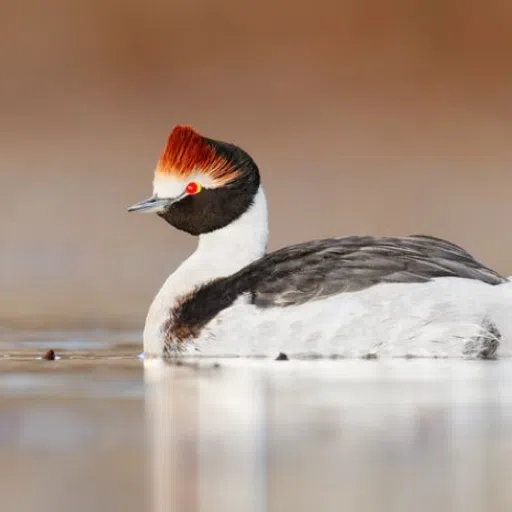
Hooded Grebe
Podiceps gallardoi
State of conservation
Critically endangered.
Description
This small aquatic bird is endemic to high-altitude lagoons in southern Patagonia, particularly in Santa Cruz. Its black and white plumage makes it unmistakable, and its habitat is limited to freshwater ecosystems.
Threats
Invasive species: The introduction of the American mink, an aggressive predator, and exotic fish that compete for native food.
Climate change: The decrease in water level in the lagoons affects their reproduction.
Habitat alteration: Human activity near lagoons can disturb their nesting areas.
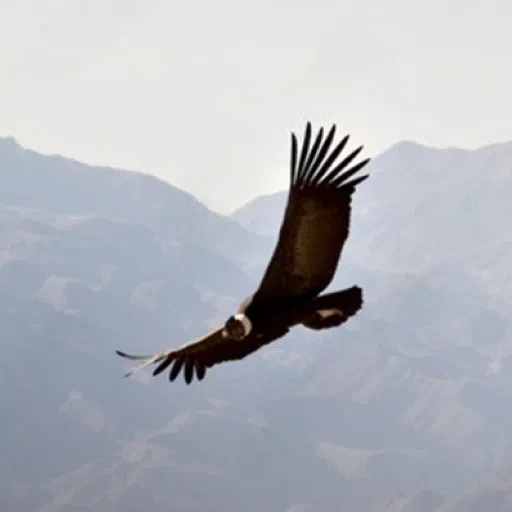
Andean Condor
Vultur gryphus
State of conservation
Near threatened, with vulnerable local populations.
Description
It is the largest flying bird in the world, with a wingspan of up to 3 meters. It mainly inhabits mountainous and open areas where it finds air currents to fly.
Threats
Poisoning: It is often the victim of toxic baits intended for predators such as foxes and pumas.
Poaching: Although it is protected, it continues to be hunted due to superstitions and conflicts with ranchers.
Reduction of carrion: The decline in wild animals limits their main source of food.
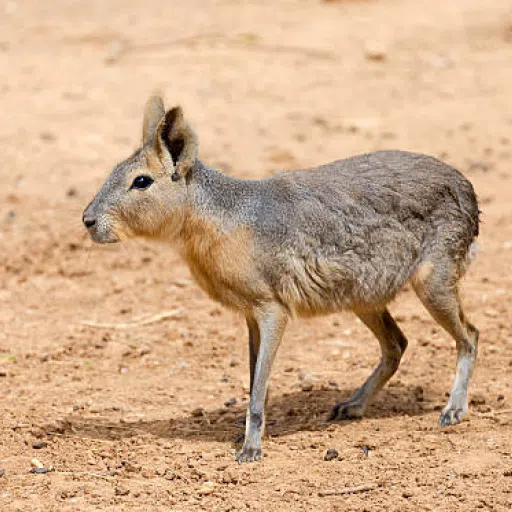
Mara Hare
Dolichotis patagonum
State of conservation
Threatened.
Description
This mammal, endemic to Argentina and also known as the Patagonian mara, resembles a large rodent, with long legs and prominent ears. It is a swift runner that prefers open, semi-arid areas.
Threats
Habitat loss: The expansion of agriculture and livestock farming reduces the natural areas it needs to survive.
Illegal hunting: It is often hunted for its meat and skin, even though it is protected.
Competence: It is displaced by introduced species such as the European hare, which competes for food and space.
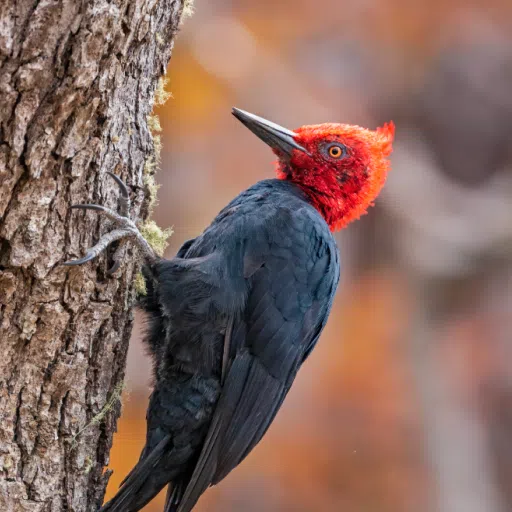
Giant Woodpecker
Campephilus magellanicus
State of conservation
Vulnerable.
Description
South America's largest woodpecker depends on lenga and ñire forests for nesting and finding food, mainly larvae and insects.
Threats
Deforestation: Illegal logging and forest fires destroy the trees it uses to live.
Habitat fragmentation: Forests are becoming increasingly disconnected, making it difficult for them to reproduce and feed.
Fun fact:
Lichens are biological indicators of air purity.
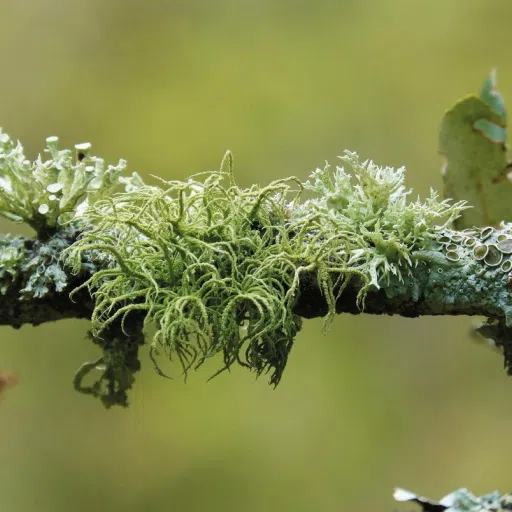
In it Los Glaciares National Park, Lichens are key players in the ecosystem due to their resilience and adaptability. These organisms are exceptional biological indicators because their growth is closely linked to air purity. This means they thrive in places with very low pollution, such as the park, where the air is exceptionally clean and environmental pollution levels are minimal.
Key aspects of lichens
of Los Glaciares National Park
1. Species diversity:
In the park there are different forms of lichens, such as crustose (flat and attached to surfaces such as rocks), foliose (leaf-shaped) and fruticose (with branched structures).
2. Ecological role:
- They contribute to soil formation by slowly breaking down rocks.
- They serve as food for certain animals, although their nutritional value is limited.
- They help maintain the balance of local ecosystems by participating in nutrient cycles.
3. Adaptations to extreme climates:
The lichens are perfectly adapted to the park's cold, windy climate. They can survive in conditions of low temperatures, low humidity, and intense solar radiation, common characteristics in the glacial region.
Why do they grow in places with low pollution?
Lichens are extremely sensitive to pollutants, especially sulfur dioxide and other chemical compounds present in the atmosphere. In polluted environments, lichens lose their ability to perform their vital functions and die. Therefore, their presence in Los Glaciares National Park is an indicator of the excellent air quality in the region, a pristine environment where these organisms can thrive without significant human interference.