Laguna Nimez: Complete Guide to El Calafate's Urban Nature Reserve (2026)

Quick summary: A few minutes' walk from downtown El Calafate, Laguna Nimez is the most underrated stop on the itinerary. On a flat 3 km walk you can see Chilean flamingos, black-necked swans, upland geese and black-faced ibis with the Andes and Lago Argentino as a backdrop. It is an IBA site designated by BirdLife International, with a historical record of 132 bird species. 2026 fee: ARS $12,000 foreigners, $6,000 Argentines, free for El Calafate residents and under-18s. Open 365 days, paid in cash at the entrance, no booking required.
It doesn't have the spectacle of Perito Moreno or the epic of Fitz Roy, but it is the only place in town where, in a single afternoon, you connect with Patagonian wildlife without leaving the urban grid. It is one of the country's first municipal urban nature reserves and is administered by the National University of Patagonia Austral. This guide sums up everything you need to know: verified 2026 fees, how to walk there, which birds you'll see (with scientific names), the best season, the best time of day, and the practical details the official site never quite gathers in one place.
What the Laguna Nimez nature reserve is
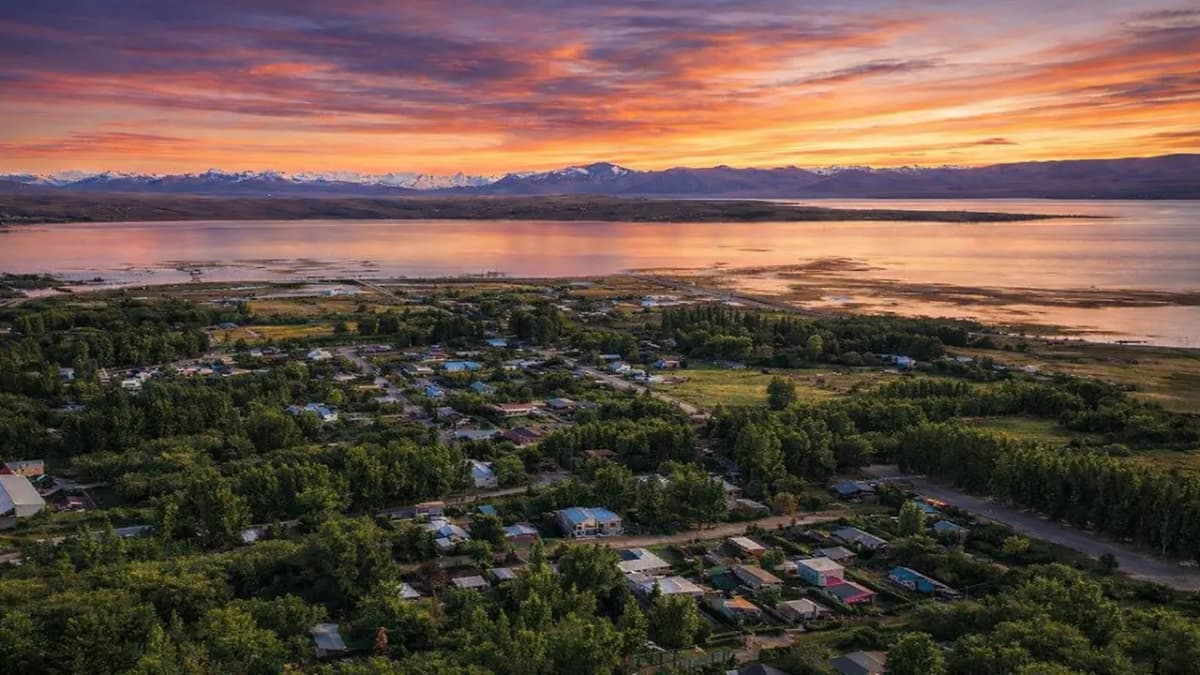
Laguna Nimez is a municipal floristic and faunal nature reserve located within the urban grid of El Calafate, on the southern shore of Lago Argentino. It was created in 1986 by Ordinance HCD No. 033/86 —just a few months after the Costanera Sur Ecological Reserve in Buenos Aires—, making it one of Argentina's first municipal urban reserves.
It covers about 70 hectares spread across five environments: wetland (the Nimez and Escondida lagoons), shrubby steppe, reed beds, the Lago Argentino shoreline, and flooded grassland. That diversity of microhabitats in such a small space is why such a small site concentrates enormous bird variety: there is a historical record of 132 bird species, equal to 12.3% of Argentina's 1,074 bird species (Aves Argentinas list, 2022 edition).
Since 2001, management has been under a commodatum agreement with the National University of Patagonia Austral (UNPA), with the support of the El Calafate Bird Observers Club (COA) and the Santa Cruz Guides Association (AGUISAC). In 2005, BirdLife International and Aves Argentinas designated it an Important Bird Area (IBA SC12) —the international recognition that puts it on the serious Patagonian birdwatching circuit. On April 4, 2024, the El Calafate Town Council approved its formal Management Plan, finally giving it a long-term operating framework.
The name
The reserve is named after Augusto Nimez, one of the early settlers and pioneers of the village of El Calafate. Naming it this way honors the people who lived in and shaped this corner of Patagonia in the town's earliest days, keeping their memory alive in one of the city's most beloved natural spaces.
Practical info 2026
Address: Av. Costanera Pte. Néstor Carlos Kirchner 2075, El Calafate, Santa Cruz. Phone: 02902 49-5536.
Hours by season
- Summer: Monday to Sunday, 9:30 am to 7:30 pm.
- Winter: Monday to Sunday, 10:00 am to 6:00 pm.
- Open all year (365 days).
Current fees
| Category | Price |
|---|---|
| Foreigner (general) | $12,000 |
| Non-resident Argentine (outside Santa Cruz) | $6,000 |
| Santa Cruz province residents | $1,000 |
| National retirees | $1,000 |
| El Calafate residents | free |
| Under 18 | free |
| School groups | free |
Payment is cash only, in Argentine pesos. There is no card terminal and dollars are not accepted.
The ticket is valid for re-entry without paying again during your stay in town. Keep it if you plan to come back at sunset or the next day with better light.
Do you need to book?
No. You buy your ticket at Casa Verde (the visitor center) on arrival. This sets it apart from most El Calafate excursions, which do require advance booking.
Length of the visit
The interpretive trail is 3 km on flat terrain with no elevation gain. It takes 1h 30min on average, but a relaxed birdwatching visit can stretch to 2 or 3 hours.
How to walk there from downtown
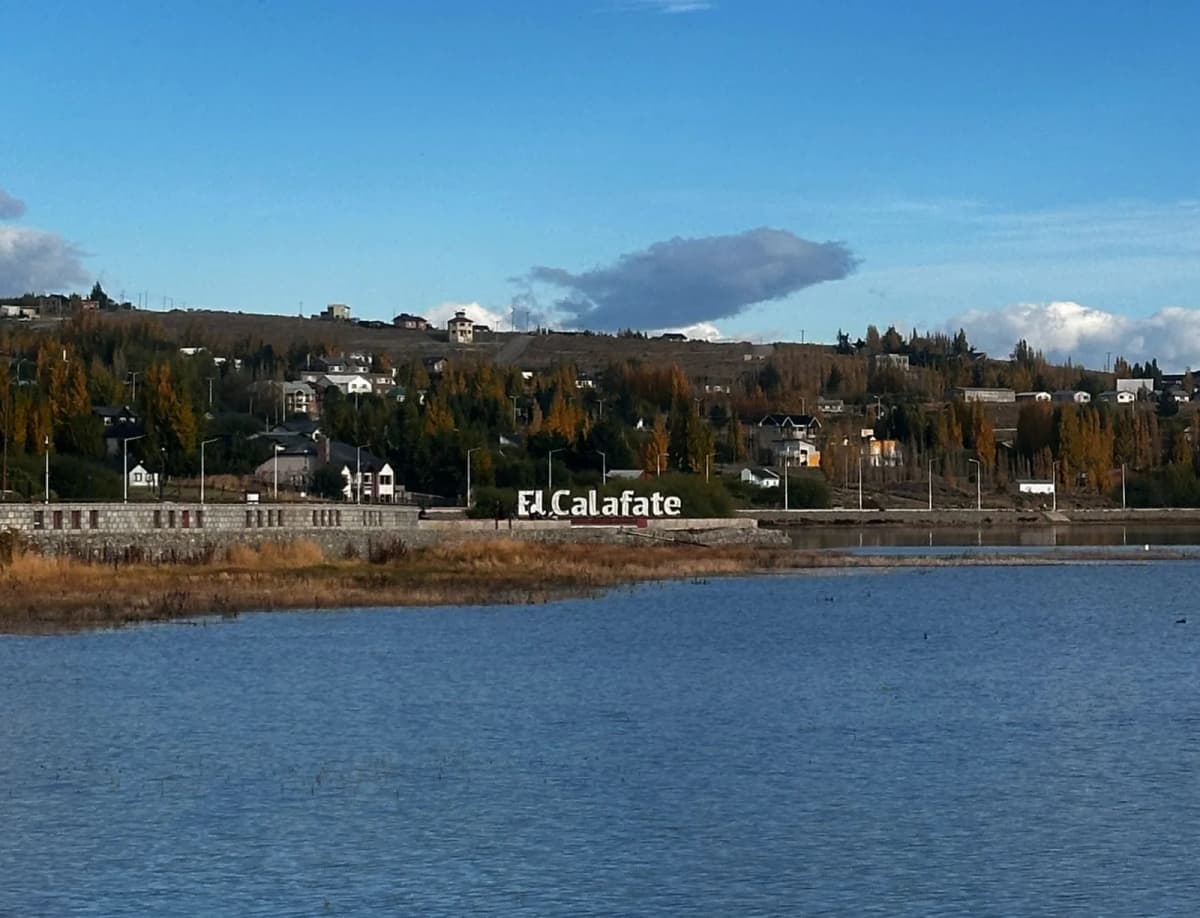
Here's the good part: you don't need a car. The reserve is about 1 km from the commercial center and is a 15-20 minute walk.
Recommended route:
- From Av. del Libertador (the tourist pedestrian street), head to the corner of Ezequiel Bustillo —the landmark is the Los Glaciares National Park headquarters.
- Go down Bustillo to the north, crossing the white bridge over the Calafate stream.
- When you reach the waterfront, turn right (east) and walk along the Néstor Kirchner waterfront about 500-600 meters to the entrance.
By car: there is free parking right outside the main entrance. If you're coming from the airport or the Glaciarium by taxi, you can ask to be dropped at the door. Taxi from downtown: 5 minutes.
By bike: a comfortable option; several downtown shops rent bicycles.
Which birds you can see at Laguna Nimez
The official site mentions 132 species recorded historically, and the wardens estimate around 80 regular species between residents and frequent migrants. A single census of the Calafate wetland counted up to 7,500 birds of 59 species, a recent record for the area.
Here are the stars, grouped by environment, with scientific names for serious birdwatchers.
The waterbirds you must recognize
Chilean flamingo (Phoenicopterus chilensis). The El Calafate postcard. Concentrations of 50 to 100 individuals are common between the lagoons and the lakeshore, especially in spring and summer. Pale pink tone, grey-blue legs with strong pink joints. They feed by filtering microorganisms from the mud; seeing them with the snowy range behind is the image most people come for.
Black-necked swan (Cygnus melancoryphus). Elegant, white with a black head and neck and a red caruncle at the base of the bill. Usually moves in pairs across calm waters.
Coscoroba swan (Coscoroba coscoroba). The other swan, fully white with a red bill. Smaller than the black-necked, it shares its habitat.
White-tufted grebe (Rollandia rolland) and great grebe (Podiceps major, subspecies navasi). The system's divers. The great grebe appears regularly along the lakeshore.
Ducks: the family is over-represented. Expect crested duck (Lophonetta specularioides), Chiloé wigeon (Anas sibilatrix), yellow-billed pintail (Anas georgica), speckled teal (Anas flavirostris), red shoveler (Anas platalea), cinnamon teal (Anas cyanoptera) and the two stiff-tailed ducks (Oxyura jamaicensis and O. vittata). The black-headed duck (Heteronetta atricapilla) has its southernmost known records at Nimez —something to brag about if you find it.
Flying steamer duck (Tachyeres patachonicus). The Patagonian steamer duck that can actually fly, unlike its flightless cousins on the Atlantic and Chilean coasts.
Grassland and steppe
Upland goose (Chloephaga picta). Patagonian goose, the male with a white head, the female with a cinnamon-brown neck. Grazes in groups.
Black-faced ibis (Theristicus melanopis). Large ibis, long curved bill, cinnamon face and neck, black and white wings. The sign with its photo is one of the reserve's icons.
Southern lapwing (Vanellus chilensis), South American snipe (Gallinago paraguaiae), long-tailed meadowlark (Sturnella loyca, intense red breast) and spectacled tyrant (Hymenops perspicillatus).
Patagonian tinamou (Tinamotis ingoufi). A near-endemic tinamou, similar to a partridge. Under-recorded according to BirdLife: if you see it, log the observation to eBird.
Raptors
Chimango caracara (Milvago chimango), the most common. Cinereous harrier (Circus cinereus), flying low over the reed beds. American kestrel (Falco sparverius) and, occasionally, peregrine falcon (Falco peregrinus).
Shorebirds and Nearctic migrants (on the Lago Argentino shore)
Magellanic plover (Pluvianellus socialis). Vulnerable per the IUCN Red List (category updated in December 2023); Argentina and Chile consider it "Endangered." Endemic to southern Argentine and Chilean Patagonia; its global range is limited to Santa Cruz, Tierra del Fuego and the Magallanes Region, with key sites in the Río Gallegos estuary and the Río Chico. The 2021-2024 censuses by the Pluvianellus Project recorded fewer than 400 individuals across its entire range. There are recent confirmed observations at the Laguna Nimez eBird hotspot.
Two-banded plover (Charadrius falklandicus), rufous-chested dotterel (Charadrius modestus), Baird's sandpiper (Calidris bairdii) and white-rumped sandpiper (Calidris fuscicollis). The two sandpipers are Nearctic migrants that spend the austral summer here and breed in the Arctic (Canada, Greenland, USA).
Magellanic oystercatcher (Haematopus leucopodus). Intense orange bill, contrasting plumage.
The hidden gem: Austral rail
The Austral rail (Rallus antarcticus) is the species with the highest conservation value inside the reserve: globally vulnerable, it lives in very few places on the planet, and the reed beds of Laguna Nimez are one of them. It is elusive —you'll hear it more than see it—, but its presence is one of the reasons the reserve holds IBA status.
Mammals and others
South American grey fox (Lycalopex griseus), which dens among the bushes; rodents; pichis (dwarf armadillos); and the "calafate bug," a native true bug that lives only on the calafate shrub (Berberis microphylla).
Many generalist travel guides suggest the hooded grebe (Podiceps gallardoi) —a critically endangered grebe endemic to Santa Cruz— can be seen at Laguna Nimez. It can't: it breeds on the basaltic plateaus of western Santa Cruz (Strobel, Buenos Aires, Asador), several hours away on Route 40, and winters in the Atlantic estuaries. Seeing it requires a dedicated trip with specialized operators. It is not at Nimez.
Best time to visit
The reserve is open 365 days a year. Each season has its appeal and the "best" depends on the trip's goal:
Spring (September-November). Mild temperatures, wind more manageable than in peak summer, plants in bloom, courtship and first chicks. For many birders it is the best window: migrants start arriving and breeding activity peaks.
Summer (December-February). Peak diversity and peak tourism. This is when there are more flamingos and the "pink with the range behind" postcard works best. Also when chicks and the highest number of species appear, including the Nearctic sandpipers. Downsides: more wind, days with 16-17 hours of light, and the busiest reserve.
Autumn (March-May). Fewer people, less wind, golden light ideal for landscape and bird photography. Flamingos start thinning out but diversity remains high.
Winter (June-August). For those looking for a different experience. The lagoon and Bahía Redonda partially freeze —the bay can turn into a "natural ice rink." The residents stay (raptors, Austral rail, some ducks), sheltering in the reed beds, the only body of water that doesn't freeze thanks to the vegetation. Fox tracks in the snow, absolute silence. If your trip falls in winter, also read our El Calafate clothing and weather guide.
To see flamingos: aim for October to March. In winter their presence is occasional.
Best time of day
As in any bird reserve, sunrise and sunset are the moments of peak activity. But since Nimez opens at 9:30 am in summer and 10 am in winter, pure sunrise falls outside operating hours: you can catch it from the outer waterfront and Bahía Redonda, which are freely accessible.
The practical recommendation: enter the reserve between 5 and 6 pm in summer, walk the trail slowly, and finish with the "golden hour" sunset between 7 and 8 pm. The light softens, the Patagonian wind tends to drop, birds return to the reed beds and the range turns pink. In summer, with sunsets extending past 10 pm, you can keep enjoying the exterior once the reserve closes.
In winter (6 pm closing), it's better to enter at 2-3 pm.
If your goal is strictly birdwatching, cloudy windless days are your best friend: more bird activity and less backlight.
What to bring: practical checklist
- Layered clothing. It's Patagonia: you can get full sun, 60 km/h wind and a downpour on the same day. Thermal base layer, fleece mid-layer, windbreaker shell. In winter, a warm jacket on top.
- Footwear: light trekking shoes or comfortable sneakers with a firm sole. The trail is flat but dirt and can be damp.
- Sunscreen and a hat. UV radiation in El Calafate in summer is high.
- Binoculars. If you have them, bring them (at least 8x42 for serious birding). If not, they are rented at the Casa Verde entrance.
- Camera with a telephoto lens if you photograph birds. Some birds get trusting and come too close to frame.
- Insect repellent in summer (mosquitoes near the reed beds).
- Water and a snack. Water is sold at the entrance, but it's worth bringing your own.
- Cash in pesos for the entrance.
- Your own trash bag.
Is it good for kids and accessible?
Yes, it works perfectly with kids. The trail is flat, short, signposted and the reserve is designed as an educational space. The interpretive signage with high-definition photos works like a visual scavenger hunt: identifying species from the chart becomes a game. There is a picnic area at the entrance. It is not stroller-friendly for the whole route: the entrance boardwalk is, but the inner trail is natural terrain.
As for accessibility, the entrance boardwalk and an initial stretch are prepared for wheelchairs, and there is an adapted restroom. The rest of the trail is uneven natural terrain: passability depends on the ground condition and the type of chair. The administration has more accessibility work in the pipeline.
Conservation: how to care for the reserve
Urban proximity is both Nimez's greatest virtue (access, monitoring, education) and its greatest threat. Documented risks include:
- Predation by domestic dogs and cats that enter the perimeter.
- Historical discharge of urban effluents from the nearby plant, one of the factors that pushed the Magellanic plover out of the main lagoon.
- Trampling and human disturbance during nesting season.
Good practices for visitors:
- Don't leave the trail.
- Don't feed the birds: it breaks their behavior and health.
- Don't disturb nesting birds (in spring-summer you'll see "sentinels" that fly over and sound the alarm).
- Don't pick calafate berries inside the reserve (it's prohibited; the calafate feeds several species).
- Take all your trash with you.
The entrance ticket is used entirely for the site's management, conservation, ecotourism and environmental education.
How to combine it with other activities in El Calafate
Nimez works very well as a mid-afternoon plan between more intense activities. Combinations we recommend:
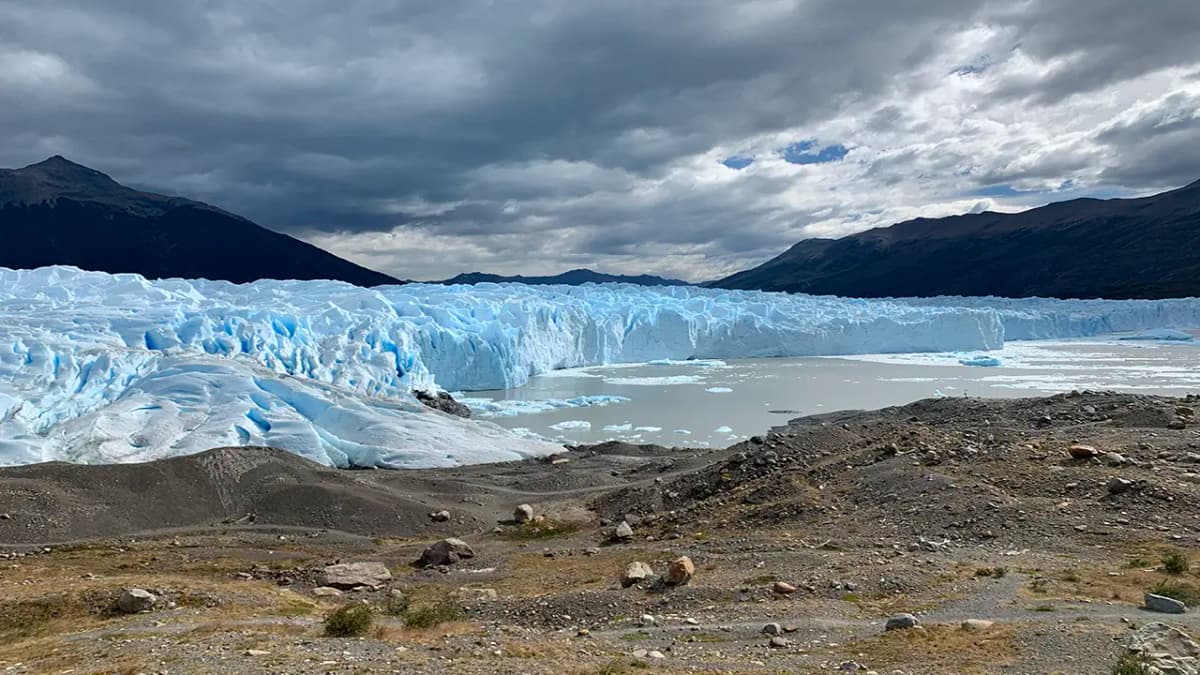
- Perito Moreno day + Nimez at sunset: you get back to town around 5 pm after the Perito Moreno Glacier excursion, freshen up, walk the 15 minutes to the reserve and close the day with the sun setting over the calm waters.
- Glaciarium day + Nimez + dinner downtown: the Glaciarium takes up the morning; Nimez 4-7 pm; dinner on Av. Libertador.
- Free day or partial rain day: if the weather isn't right for a big excursion, Nimez is still viable (put on your windbreaker and go anyway). Bonus: rain scares off tourists, not birds.
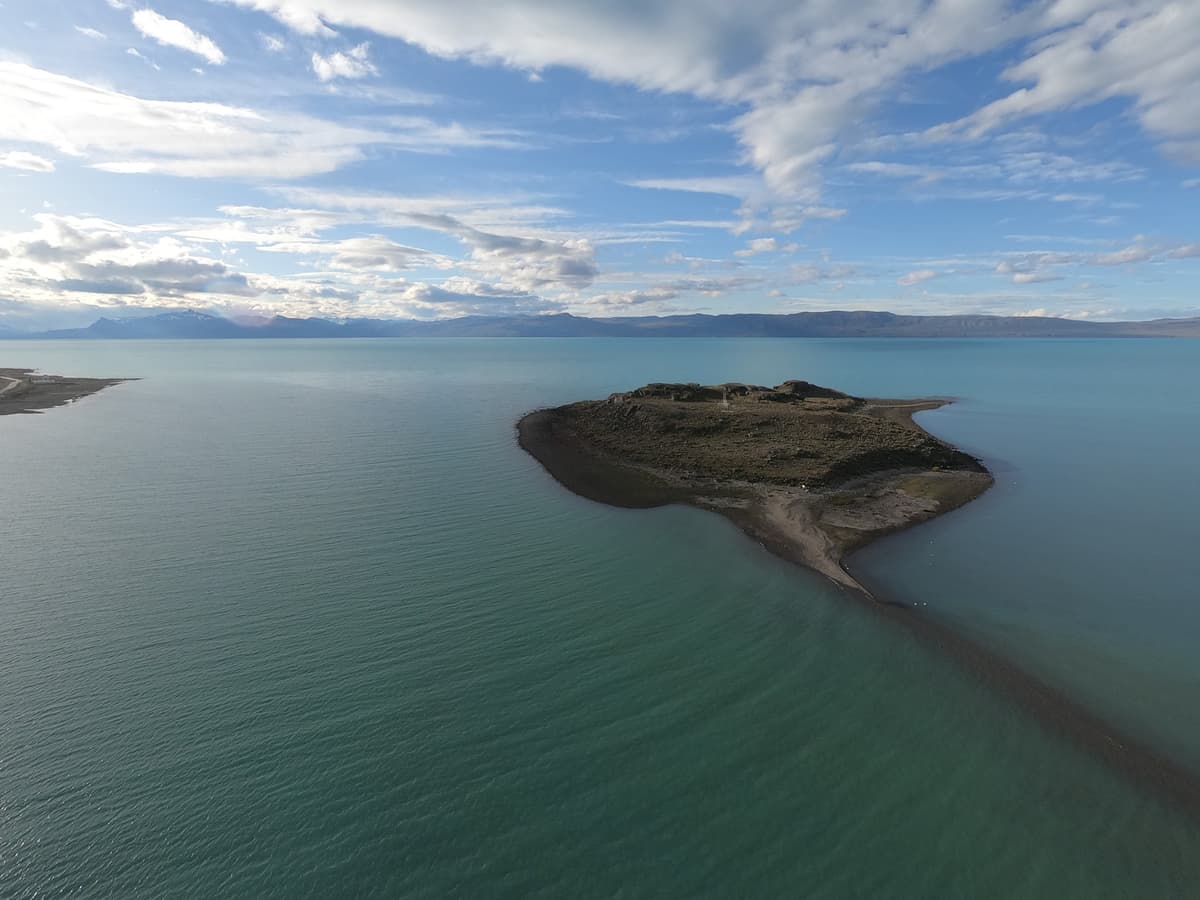
- Combined with Isla Solitaria: if you're into the wildlife and scenery of Lago Argentino, complement it with our Isla Solitaria and Lago Argentino guide to understand the whole ecosystem.
If you're putting together the trip budget, check our updated guide on how much it costs to travel to El Calafate to estimate entrances, meals and excursions well.
For birders who come to El Calafate for the wildlife, Laguna Nimez is the cluster's urban base: it lets you start and "calibrate" before heading to more distant sites like Punta Walichu, the Lago Roca shores, or the trek to the hooded grebe plateaus.
Frequently asked questions
The most common questions about visiting the Laguna Nimez Nature Reserve.
Our final recommendation
Laguna Nimez is the short answer to the question "what do I do in El Calafate when I don't want another full-day excursion?". For an entrance fee that's affordable even for non-resident Argentines, you get an IBA wetland with 132 recorded species, Chilean flamingos in their natural habitat and the Andes as a backdrop. And if you're a birdwatcher, this reserve is the mandatory starting point to understand the Calafate Wetland ecosystem before heading to more remote steppe sites.
Calafate Tours is a local operator based in El Calafate. If you're planning your trip and want us to put together a Perito Moreno + Laguna Nimez at sunset combo, or a full day of birdwatching in the Calafate Wetland with a specialized guide, message us on WhatsApp and we'll arrange it.