Perito Moreno Glacier Walkways: How to Visit, Circuits and Prices
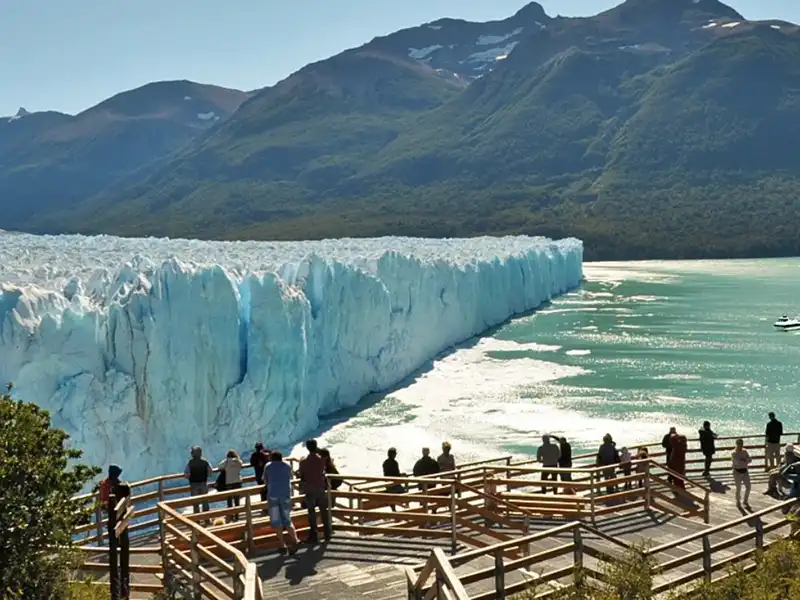
The walkways are how 90% of visitors get to know the Perito Moreno Glacier: a network of about 5 km of elevated metal trails, facing the glacier's front, that you walk at your own pace with no physical demand whatsoever. You don't need to be fit or have any gear: ordinary sneakers will do. It's the only way to stand a few meters from the ice front and hear the roar of a calving without walking on the glacier.
They are about 80 km from El Calafate, around 1 hour and a half of travel along Provincial Route 11, at the western tip of the Magallanes Peninsula, inside Los Glaciares National Park. The park entrance fee, according to the National Parks Administration (APN, updated to January 2026), costs $45,000 ARS for foreigners and $15,000 ARS for Argentines.
This guide is for those who want to see the glacier from the balconies —not walk on it— and need the concrete details: how to get there, how much time to set aside, which circuit to do, and which ticket is best. If what you're after is the walk on the ice, that's another thing entirely and we cover it in our Minitrekking vs Big Ice guide.
The essentials in 6 points
- What they are: ~5 km of metal walkways facing the glacier, free roaming, no physical demand. Suitable for all ages.
- How much time: set aside 3 to 4 hours to do the circuits at ease and wait for a calving.
- How to get there: ~80 km / 1h30 from El Calafate via RP11 (paved). By tour, car, or regular bus.
- Park entrance fee (Jan 2026): $45,000 foreigners / $15,000 Argentines. Children under 6 and Argentine retirees, exempt.
- Best time of day: from mid-morning to mid-afternoon for good light and better chances of seeing ice fall. Before 10 a.m. if you want fewer people.
- Accessibility: there is an elevator and ramps up to the first balcony. It's the most accessible glacier experience for reduced mobility.
What the walkways are and why they are the way to see the Perito Moreno
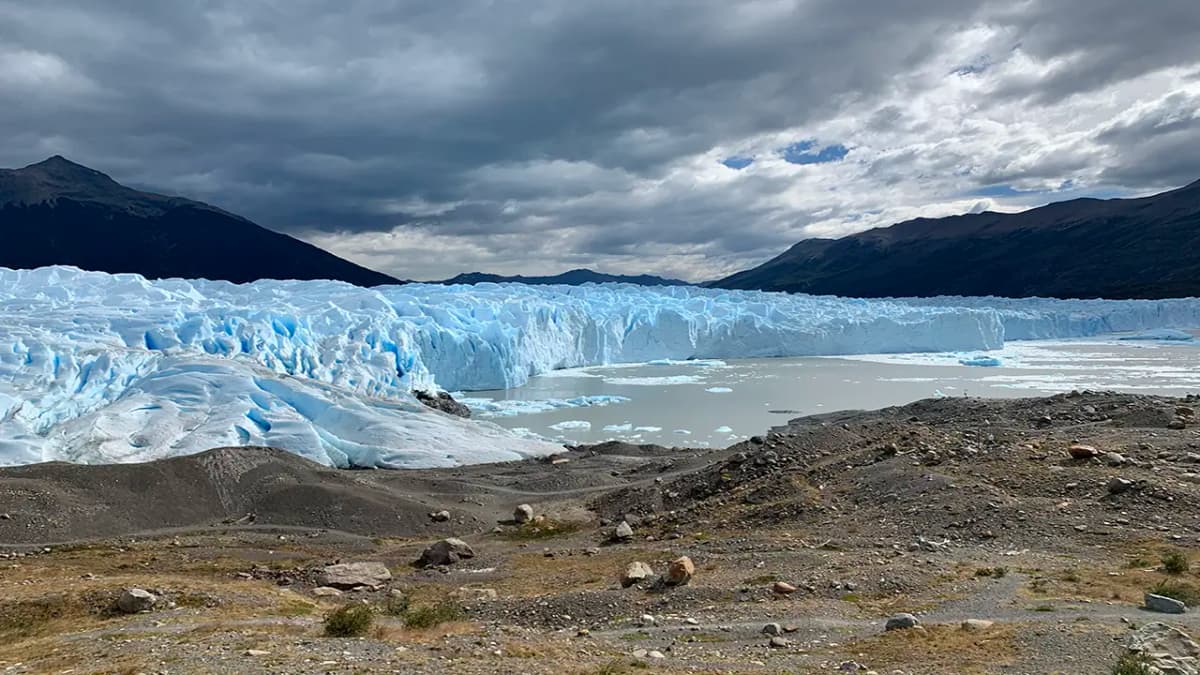
The Perito Moreno is famous, among other things, for something simple: it's one of the few large glaciers in the world you can see this close and this comfortably. That's thanks to the walkways. They are elevated metal platforms and trails, built on the slope of the Magallanes Peninsula, facing the glacier wall across the Canal de los Témpanos (Iceberg Channel).
The route is entirely on foot and free: a guide (if you go on a tour) accompanies you to the Main Balcony and explains the options, but after that you walk at your own pace. Since the whole circuit is on a walkway, you don't need mountain footwear: sneakers or even city shoes are enough. It's an activity suitable for kids, grandparents, and anyone who doesn't want (or can't) do a demanding hike.
Since 2011 there has been an elevator that takes people with reduced mobility to the first balcony, and several stretches have ramps. In practice, the walkways are the most accessible way to get to know a glacier of this scale anywhere in Patagonia.
And they are the best place to witness what everyone comes to see: the calvings. Blocks of ice the size of buildings break off the front and fall into the lake with a roar you hear before you see it. It's not something you can schedule —it happens when it happens— but staying still for a while on the lower balconies greatly increases your chances. The major phenomenon, the rupture of the ice dam over the Brazo Rico, is another story: we tell it in the complete history of the Perito Moreno Glacier.
How to get to the walkways from El Calafate
The route is about 80 km along Provincial Route 11, fully paved and well signposted. The trip takes around 1 hour and a half, with stops at viewpoints where you can see the first blue walls of the glacier in the distance. The first ~50 km are Patagonian steppe; once you cross the access gate (Portal Río Mitre) you enter Los Glaciares National Park and the landscape changes to lenga and ñire forest.
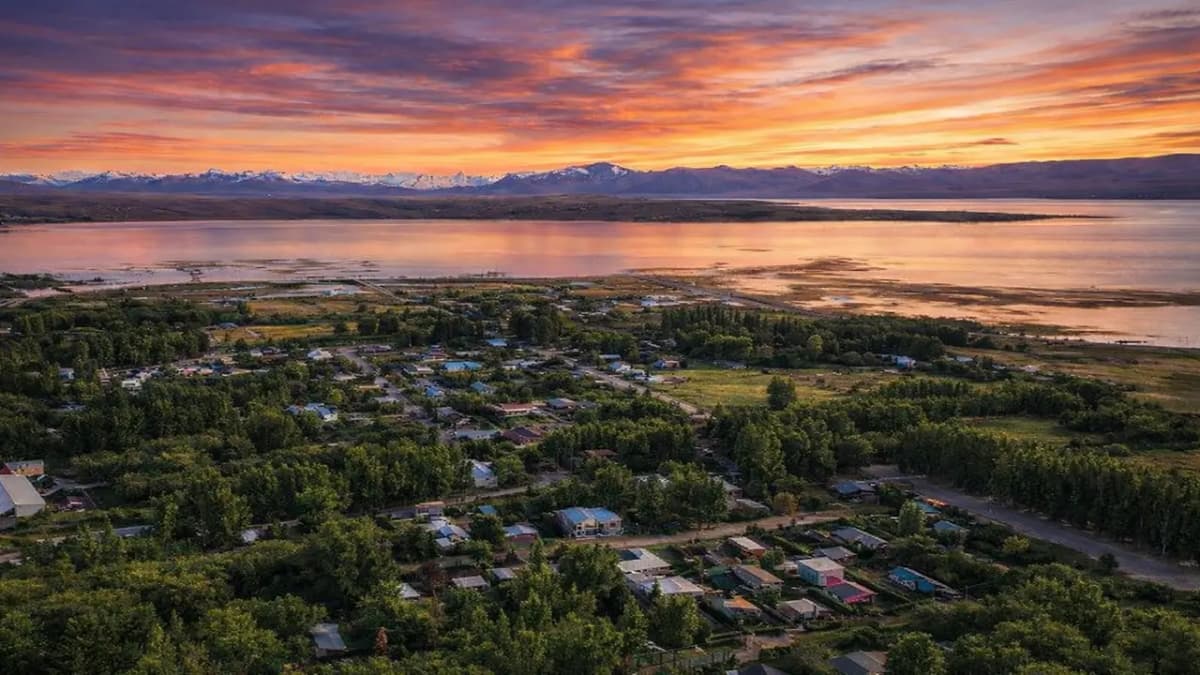
A detail we locals always watch for: as you leave El Calafate, on Lago Argentino, is Bahía Redonda, home for much of the year to black-necked swans, flamingos, upland geese, and steamer ducks. If you travel early, keep the camera handy before you reach the glacier.
You have four ways to get there. Here's the honest comparison:
| Option | Travel time | Approx. cost | Advantage | For whom |
|---|---|---|---|---|
| Tour / organized bus | ~1h30 + stops | Varies by operator (no entrance fee) | They pick you up at your hotel, bilingual guide, zero logistics | Most visitors |
| Rental car | ~1h30 | Rental + fuel + parking | Total flexibility: sunrise, sunset, waiting for good weather | Those who want to go at their own pace |
| Regular bus (Terminal) | ~1h30 | Round-trip ticket | Cheaper than a car if you travel solo | Backpackers and tight budgets |
| Taxi | ~1h30 | The most expensive | Door to door without driving | Small groups in a hurry |
Our local recommendation for most people is the Perito Moreno walkways tour: they pick you up at your accommodation, the guide explains the geology and history along the way, and you forget about driving, parking, and coming back at night. It has AM and PM departures, with the option to add a boat trip. If, on the other hand, you're the type who likes to get up early to have the glacier nearly empty or stay until sunset, rent a car: flexibility is worth gold in Patagonia, where the weather is boss. If you arrive by plane and haven't sorted out your transfer yet, check our airport transfers guide.
Important: neither the walkways tour nor the trekking tours include the National Park entrance fee. It's a separate payment (see below). Don't pay it twice: always confirm what your excursion includes before booking.
The 5 walkway circuits: which one to do based on your time
The system is organized into five signposted circuits, connected to each other by trails and stairways. None are technically difficult, but they vary in length and in how many stairs they have. The Main Balcony is just 146 meters from the access point, and from there the trails descend to within about 300 meters of the glacier front.
| Circuit | Approx. length | What you see | Accessibility |
|---|---|---|---|
| Central (Main Balcony) | ~600 m | The classic head-on view: north and south faces and the damming zone | Ramps and elevator; the easiest |
| Lower | ~1,100 m | Closest to the ice; the best spot to see and hear the calvings | Stairs; somewhat more demanding |
| Coast | ~1,117 m | Route along the coast, from the parking lot to the North Balcony | Long stretches, gentle slopes |
| Forest | ~570 m | Among lengas and ñires, the most peaceful and shaded | Trail, few stairs |
| Accessible | ~565 m | Access to the first balcony for reduced mobility | Elevator to the first balcony |
If you're short on time, do the Central and head down via the Lower. The main balcony gives you the postcard, but the magic —the sound of the ice cracking and falling— is felt much better down below, near the front. If you have energy and hours to spare, add the Coast or the Forest, which are the quietest. Count on 3 to 4 hours to do it without rushing.
A tip that saves your legs: from the parking lot to the entrance of the walkways there is a free shuttle bus that leaves every few minutes. It saves you the steep initial climb. Use it on the way in and save your legs for the balconies.
Los Glaciares National Park entrance: 2026 prices
The entrance fee to visit the Perito Moreno Glacier costs, according to the APN (in effect since January 2025 and updated to January 2026), $45,000 ARS for foreigners (around USD 35–40 at the official exchange rate) and $15,000 ARS for Argentine residents. It's a daily pass and, when you buy it, you have to indicate that you're entering through the Portal Río Mitre (the gate toward the Perito Moreno).
| Visitor | Rate (ARS) |
|---|---|
| Foreigners | $45,000 |
| Argentine residents | $15,000 |
| Argentine students (with ID booklet) | $7,000 |
| Children under 6 | Free |
| Argentine retirees/pensioners | Exempt |
| People with disabilities (CUD) + companion | Exempt |
| El Calafate residents | Exempt |
If you're going to enter the park more than one day (for example, walkways one day and Minitrekking another), there are two ways to save:
- 50% discount on the 2nd day: by showing your ticket from the previous day (within 72 hours), you pay half on your second entry. For a foreigner, $22,500 instead of $45,000.
- Flexipass: the 3-day pass costs $90,000 foreigners / $30,000 Argentines (you pay for 2, use 3) and the 7-day, $157,500 / $52,500. They are valid for 6 months and the days can be non-consecutive.
Where to buy it: the easiest is online, on the official National Parks website (ventaweb.apn.gob.ar), especially in high season (December to February), to avoid lines. You can also buy it at the Portal Río Mitre box office, which accepts cash in pesos, debit, and credit. We have the complete breakdown, with the historical price evolution, in our National Park fees guide.
Best season and best hours to visit the walkways
The walkways are open all year round. Each season has its own character:
- Summer (November to March): the most daylight, milder temperatures, and all services running. It's also when there are the most people.
- Spring and autumn (September–October and April): quieter, cooler, with days that can deliver spectacular light.
- Winter (May to August): the glacier snow-covered, almost without crowds and with a different postcard. It gets seriously cold, but it's an experience apart.
To choose when to go based on your whole trip, check our analysis of the best time to visit El Calafate.
The best time of day, if you ask us: from mid-morning to mid-afternoon. The light hits the wall better for photos and, since the day's heat loosens the ice, there tend to be more calvings. If what you want is to dodge the groups, arrive early, before 10 a.m., and you'll have the balconies almost to yourself.
As for the area's opening hours, in summer the grounds open with a wide window (approximately 8:00 a.m. to 8:00 p.m.) and in winter it's reduced. Since it can vary by season, confirm the day's hours at the homepage or with your operator before heading out.
What to bring to the walkways
Even though there's no demanding hike, you're standing in front of a glacier: it's cold and windy even in the middle of summer. The basics we recommend:
- Layers of clothing (the classic "onion" system), with a windproof and waterproof layer on top.
- Sun protection: the radiation is strong, even on cloudy days.
- Water and something to eat, although there are services (see below).
- Binoculars, if you have them: they help you see the crevasses and details of the front.
- Closed, comfortable footwear. You don't need trekking shoes, but forget about flip-flops.
For the complete, season-tuned list, we have a dedicated guide: what clothing to bring to the Perito Moreno Glacier.
On the grounds you'll find restrooms, benches, and viewpoints with rest areas, a restaurant with a view of the glacier (Nativos), and a snack bar near the access. In other words: you can spend the day at ease, have lunch there, and keep exploring.
Walkways, trekking or boat trip? How to choose
Many people confuse "going to the Perito Moreno" with a single activity, but there are three different ways to experience it and they can be combined:
- Walkways: you see it head-on from the balconies. For all ages, no effort. It's what this guide is about.
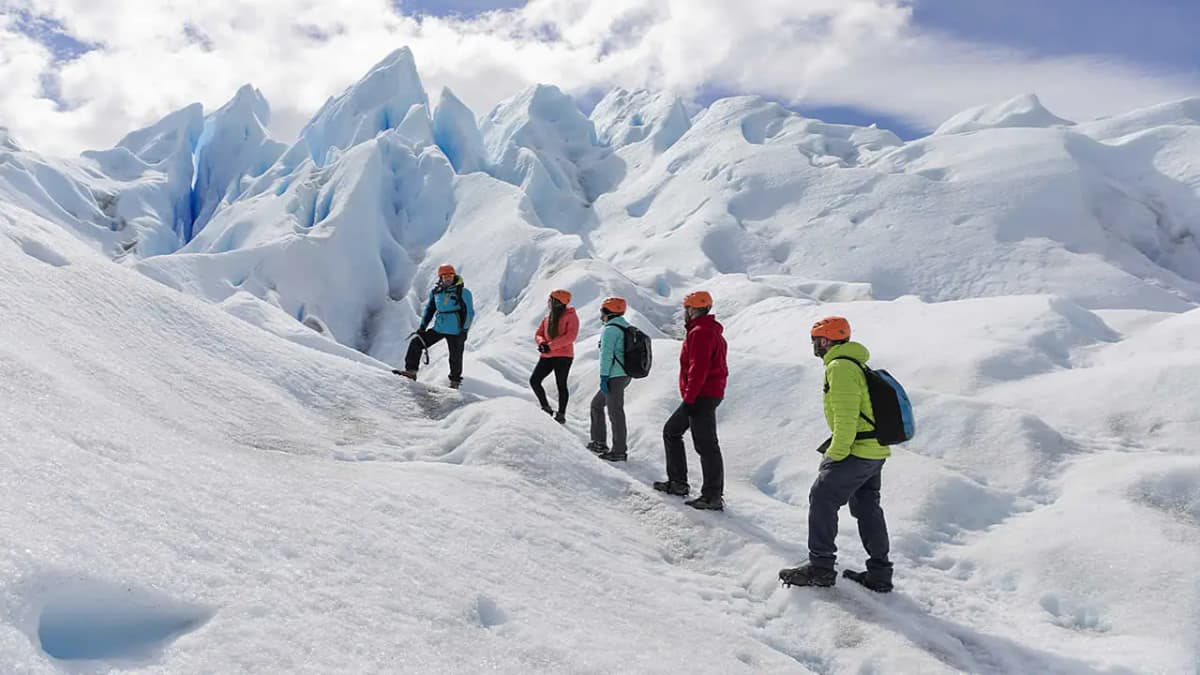
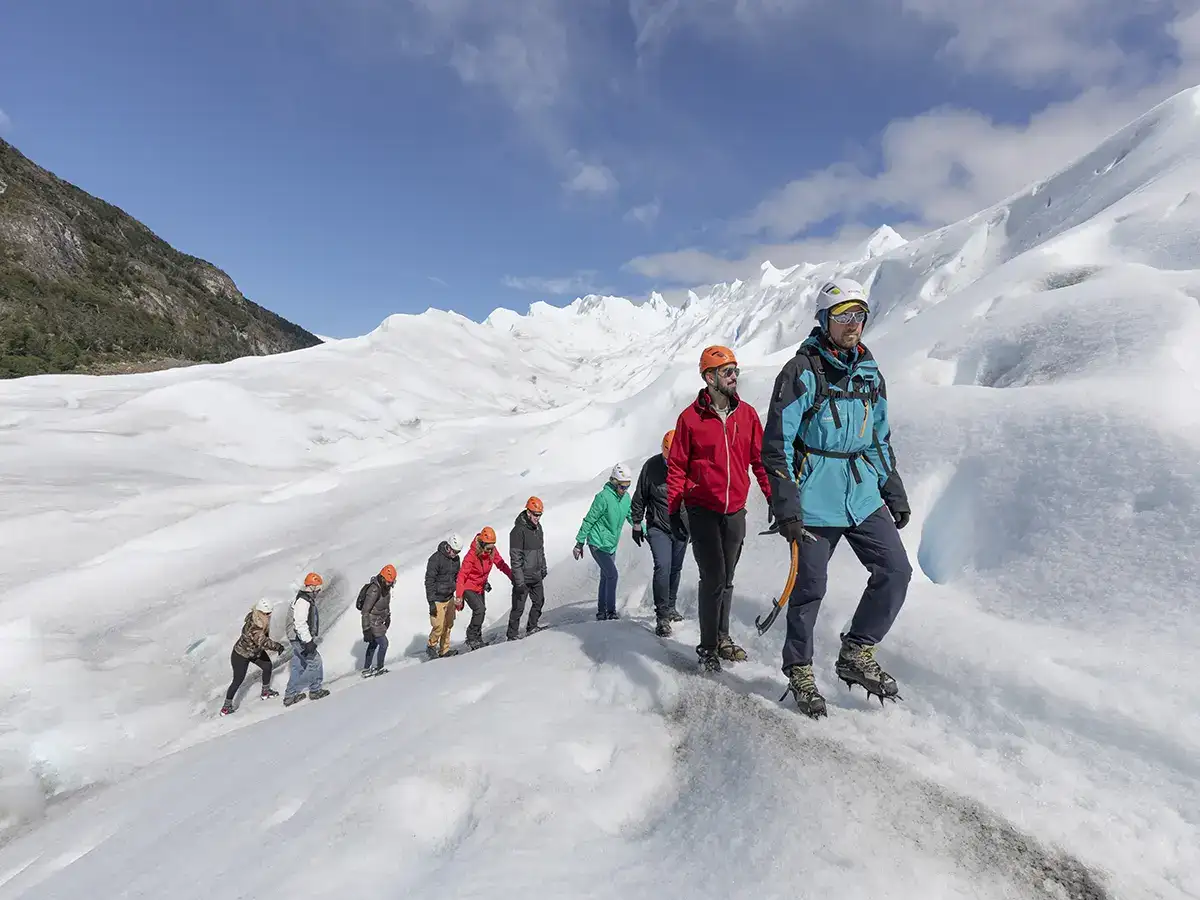
- Trekking on the ice: you walk on the glacier with crampons. Minitrekking is suitable for ages 8 to 65; Big Ice, more demanding, for ages 18 to 50. We compare them in detail in Minitrekking vs Big Ice.
- Boat trip: a boat takes you up close to the glacier walls from the water.
The good news is that it's not either-or. The walkways tour offers an optional 1-hour boat trip ("Nautical Safari") that takes you in front of the south wall —it runs at 11:45 a.m. (AM departure) or 2:30 p.m. (PM departure)— and has an additional cost worth checking when you book. If your priority is to get close by water and walk a bit to touch the ice, take a look as well at the Safari Azul. And if you want to see the great glaciers of the northern arm (Upsala and Spegazzini), that's a different excursion we compare in Todo Glaciares vs Glaciares Gourmet.
To understand how all this fits into your trip and how many days to set aside, our perfect 3-day itinerary in El Calafate will help.
Want to coordinate your walkways visit with local experts?
We live in El Calafate and put together hundreds of visits to the Perito Moreno each season. If you want us to sort out your door-to-door transfer, advise you on the best time for your date, or add the optional boat trip, write to us: we'll help you get everything ready before you travel.
Frequently asked questions
Frequently asked questions about the Perito Moreno Glacier walkways
Resolvemos las dudas más comunes.
Last updated: June 23, 2026. National Park entrance fees according to the National Parks Administration (APN), updated to January 2026. Verify current prices and hours before traveling, as they are updated periodically.