Where to Stay in El Chaltén: Campsites, Huts and Lodging (A Local's Guide 2026)
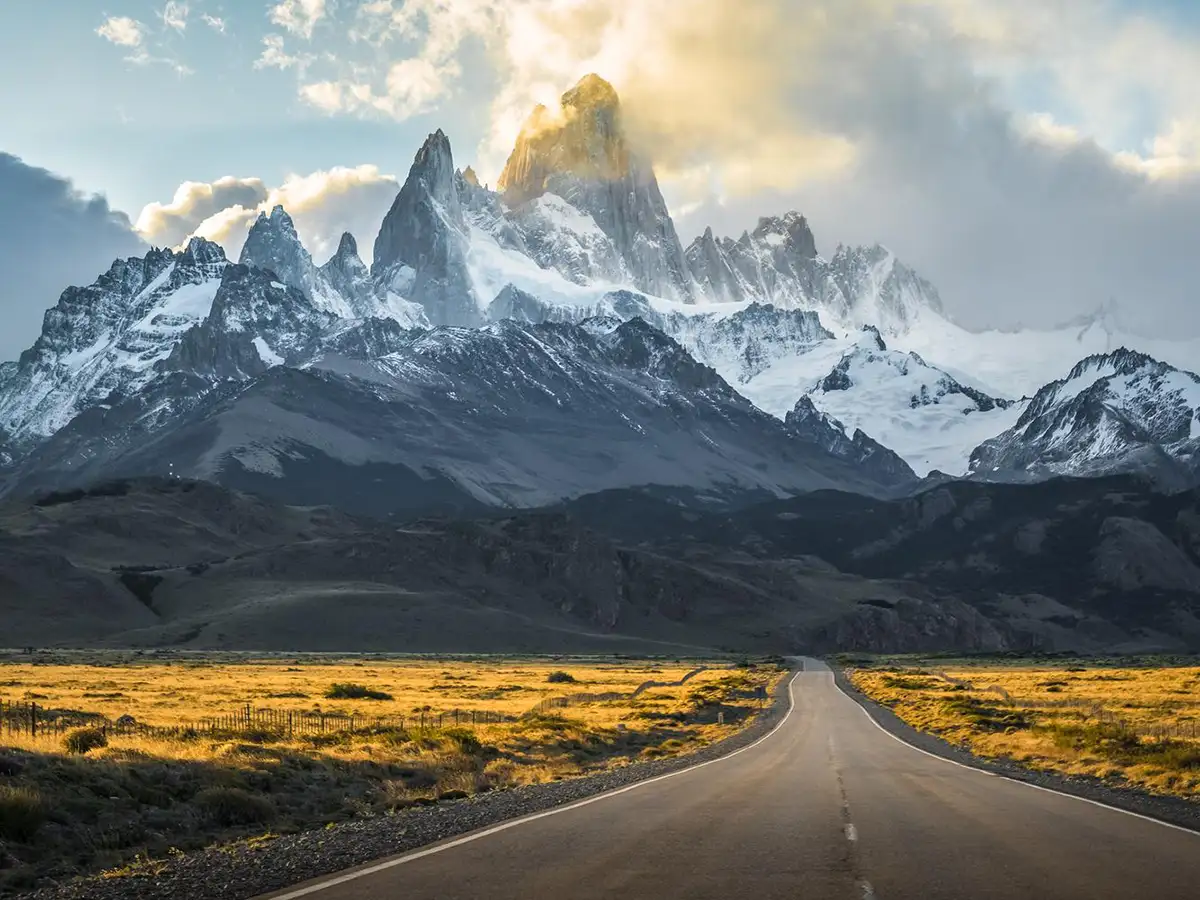
If you're searching for where to stay in El Chaltén picturing the Torres del Paine hut system, stop for a second: it doesn't work that way here. In El Chaltén, Argentina's National Trekking Capital, there is no circuit of paid mountain huts with beds and meals that you book ahead and hike hut to hut. You have three ways to sleep, and choosing well changes both your trip and your budget: at a mountain campsite inside the park, in town —which sits at the trailhead of almost every hike— or at the area's only true private hut, Piedra del Fraile.
And we'll be honest with you from the start, because that's why we live here: since late 2024, neither the trails nor the campsites of El Chaltén are free. The National Parks Administration began charging access to the Northern Zone of Los Glaciares National Park in October 2024, and since December of that year the classic campsites carry a camping fee with mandatory advance booking. If you were coming with the idea of "pitching my tent for free at the foot of Fitz Roy," this guide saves you the surprise.
The essentials, in three lines:
- There are no Torres del Paine-style huts. You sleep at a campsite, in town, or at Piedra del Fraile.
- The mountain campsites are no longer free and require mandatory advance booking.
- Town is steps from almost every trailhead: for the classic hikes, the most comfortable plan is sleeping in El Chaltén and returning to a bed every night.
The truth about El Chaltén's "huts" (the Torres del Paine myth)
We see this confusion all the time, and it comes from comparing with the other side of the Andes. In Torres del Paine (Chile), trekking is organized around a circuit of paid huts: you book months ahead, sleep in a bunk, eat in the dining hall and hike from hut to hut. It's expensive and takes planning.
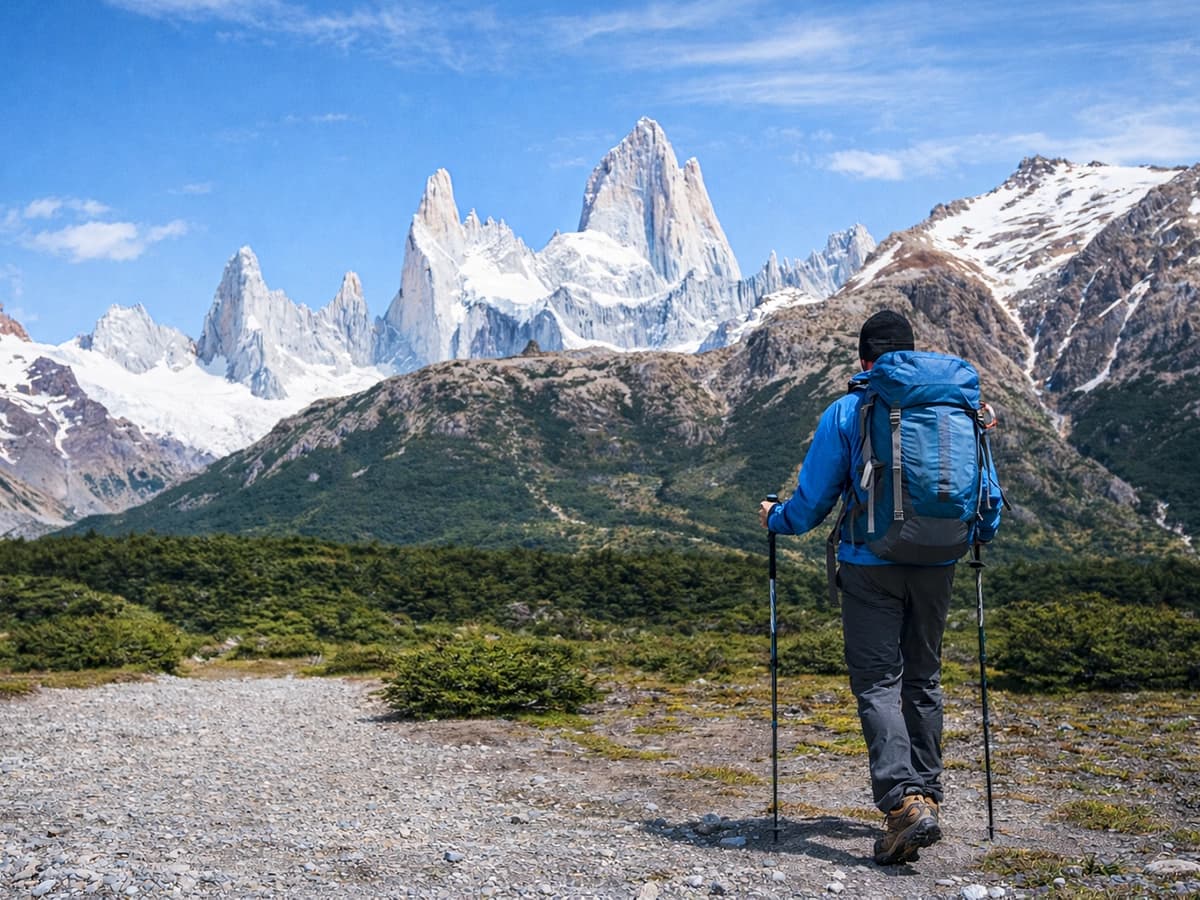
El Chaltén has nothing like that. And deep down it's good news, because town sits right at the trailheads: almost all the classics —Laguna de los Tres, Laguna Torre, Pliegue Tumbado— are done as day hikes, returning to town to sleep. You don't need to carry a tent or book huts to see the best of it. You only camp if you want a sunrise at the lagoon or plan a multi-day circuit.
So when someone searches for "El Chaltén huts," they're really looking for one of these three things — and that's where we're headed.
What changed: the trails and campsites are no longer free
This is the point most people still have outdated, so here it is with data and dates. There are two separate charges you shouldn't mix up.
1. Trail access (the APN fee). Since October 21, 2024, the National Parks Administration charges entry to the Northern Zone of Los Glaciares National Park —that is, El Chaltén's trails—, which had historically been free. These are the current fees (checked July 2026):
| Category | Northern Zone fee |
|---|---|
| General (foreigners / non-residents) | ARS $50,000 (≈ USD 35) |
| Argentine residents | ARS $25,000 |
| Students | ARS $15,000 |
| Santa Cruz residents | ARS $8,000 |
| El Chaltén residents, children 0-6, people with disabilities, national retirees, Malvinas veterans, licensed guides | Exempt |
Three key practical details: in the Northern Zone payment is online / card only at ventaweb.apn.gob.ar (no cash is accepted, so don't count on the town's ATM); there are 2-day promotional passes and 3- and 7-day Flexipasses valid in both zones of the park; and in 2025 the fee was suspended over the winter season (May 1 to September 30) and reinstated on October 1 — check whether the suspension applies to your dates. Fees update often: we keep the current values in our Los Glaciares National Park fees guide, and you can check the official National Parks site.
2. The camping fee (campsites). Since December 2024, the most-used campsites are no longer free and charge a per-person, per-night fee with mandatory advance booking. It's a separate charge from park access: if your trek includes a night in a tent, you pay both.
Budget the access and the overnight separately, and leave everything paid and downloaded on your phone before heading up: there's no signal on the trails, and the entry portals take no cash.
Mountain campsites inside the park
These are the basic campsites at the foot of the peaks, with no hotel services: you carry everything in and out. These are the ones that matter.
Poincenot campsite (base for Laguna de los Tres)
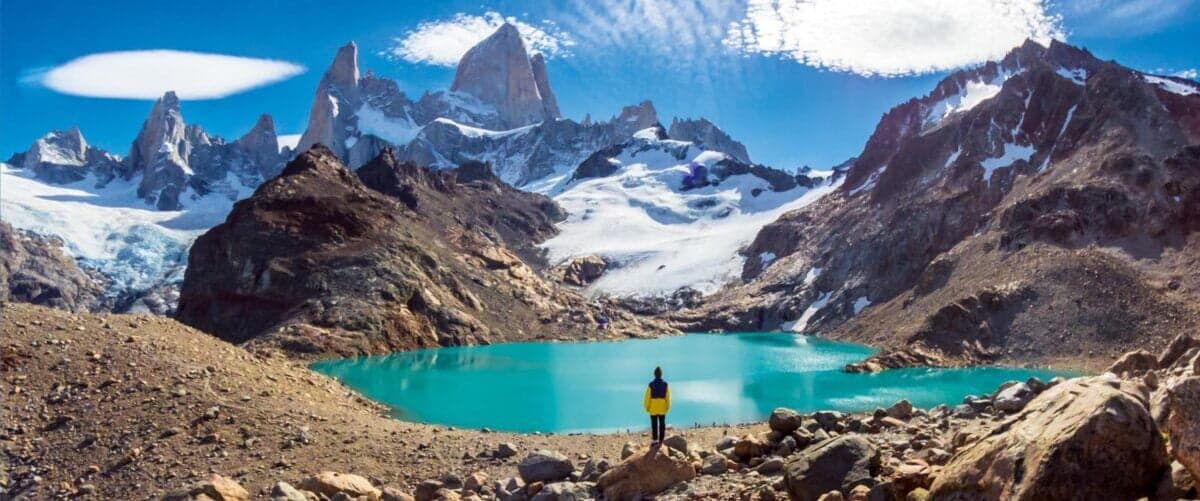
The star campsite: the base for hitting the Fitz Roy viewpoint at sunrise without doing the 20 km in one go. Since December 2024 it charges a camping fee —it started at ARS $15,000 per person per night and has been updated since; check the current rate when you book— and has a 120-person cap with mandatory advance booking through the Asociación Amigos del Parque Nacional Los Glaciares. There's no store and no electricity: it's tent, sleeping bag and gas stove.
De Agostini / Bridwell campsite (base for Laguna Torre)
The equivalent on the Cerro Torre side. Same logic: camping fee per person per night, 70-person cap and mandatory advance booking through the same Asociación Amigos system. Ideal if you want to see the lagoon and its icebergs first thing, before the wind picks up.
Laguna Capri (also paid since January 2025)
The Laguna Capri campsite, on the way to Laguna de los Tres, was the last to join: it stayed out of the initial December 2024 rollout, but since January 14, 2025 it is also paid and booking-only, through the same system as Poincenot and De Agostini. In other words: today, none of the three classic campsites is free. Capri's advantage is still its location: about 7 km from town (a 1 h 45 min walk), with one of the prettiest Fitz Roy views for a first-time camp.
Remote-area and backcountry campsites
For long circuits like the Huemul Circuit, there are the Laguna Toro, Los Troncos and Paso del Viento campsites: basic, service-free, in remote terrain. These require the APN's mandatory Remote Areas Mountain Use Registration (and, for the Huemul, a technical gear check). Not a beginner's overnight.
The golden rules of camping (APN)
- Fires are banned across the park: cooking is gas stove only.
- Zero Waste: everything you bring in leaves with you (organics included).
- Advance booking for Poincenot, De Agostini and Capri; no booking, no spot.
- No store, no electricity, no signal. Water from streams (drinkable in the upper areas).
- Pets and drones prohibited.
- Free for El Chaltén residents and children under 12; APN-licensed guides, no charge.
The only true private hut: Piedra del Fraile
If what you were looking for was literally a "hut" with a roof and walls, El Chaltén has exactly one that qualifies: Piedra del Fraile, in the Río Eléctrico valley, to the north. It's not on the town's main trail network: you reach it from the Río Eléctrico bridge (on RP 41, about 16-17 km from El Chaltén, so you need transport), and from there it's about 2 km on foot to the hut, along a private-property access with an entry charge.
It operates roughly from November to Easter and works as a base for exploring Lago Eléctrico, Laguna Pollone, Piedra Negra (the climbers' northern approach to Fitz Roy) and Paso del Cuadrado. It offers bunks in shared dorms and a wind-sheltered camping area, with a covered common space; rates are published each season, so check directly with the hut when planning.
It's a niche option —trekkers heading into the Río Eléctrico valley—, not the typical overnight for someone doing the classics.
Staying in town: inns, hostels, camping and glamping
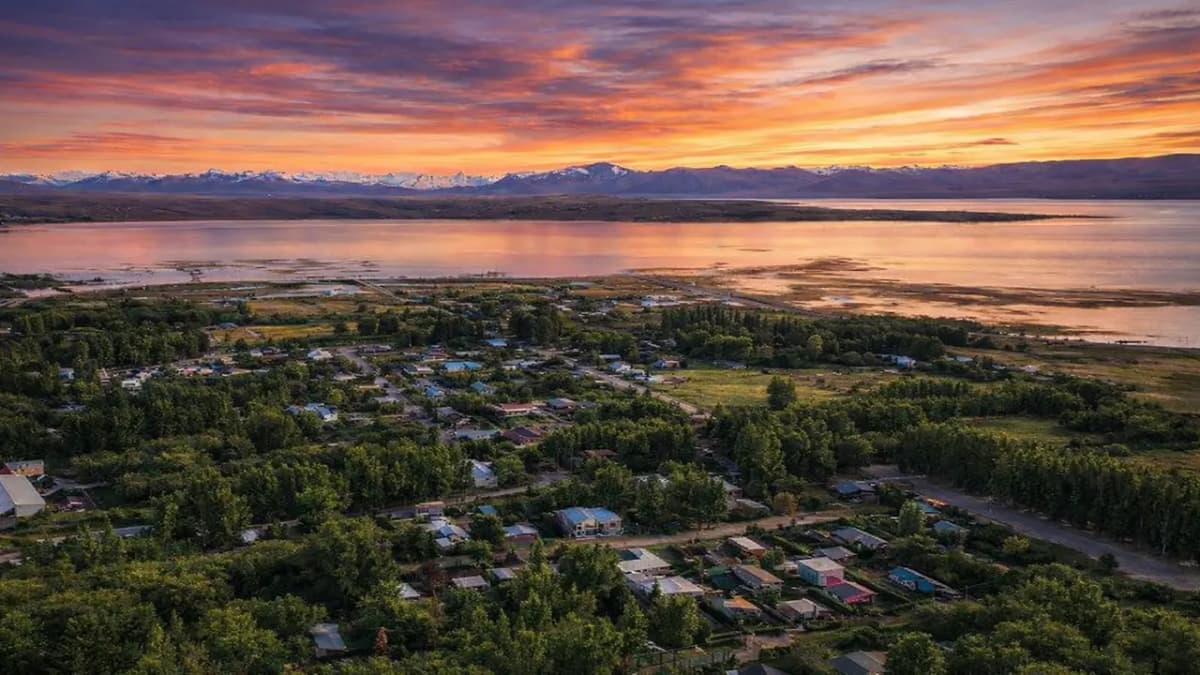
For most travelers, this is the answer: sleep in El Chaltén and walk out to hike each day. The town is small and almost every trail starts on foot from the center, so location barely matters. You'll find everything:
- Inns and hotels (3 stars and up): the most services.
- Hostels (shared or private rooms): the trekkers' and backpackers' favorite.
- Aparts, cabins and organized campgrounds in town (different from the mountain campsites: these do have bathrooms, showers and sometimes kitchens).
- Glamping / domes on the outskirts, for something special.
Rough ranges (approximate, from aggregators as of mid-2026): hostels start around USD 60 per night and 3-star hotels from about USD 140 per night. Peso prices move often, so treat these as order-of-magnitude references and verify when booking.
Two local tips: in high season (December to February) book 2 to 3 months ahead, because town fills up and prices soar. And watch out for winter: many lodgings and services close or cut hours, so confirm your place is operating before traveling in June-September. To decide when to come, also check our best time to visit guide.
What's best for you? Campsite vs. town vs. hut
In short, the way we'd tell a passenger:
- You're doing the classics (Laguna de los Tres, Laguna Torre, viewpoints): sleep in town. Do each trail as a day hike and come back to a bed and a hot shower. No tent needed.
- You want a sunrise at the lagoon or to chain two big days: add one night of camping (Poincenot or De Agostini), booked ahead. The rest, in town.
- You're heading into the Río Eléctrico valley or the northern traverses: that's where Piedra del Fraile comes in.
- You're doing the Huemul Circuit: backcountry campsites + mandatory registration. Advanced level.
To map out which trail on which day, we have the complete El Chaltén trekking guide and the classic in detail in our Laguna de los Tres guide. And don't forget the layering system for Patagonian weather: wherever you sleep, the wind is the same.
Getting there (and whether it's worth sleeping over)
El Chaltén is about 215-220 km from El Calafate, roughly 3 hours on paved road, with daily bus service year-round (and more frequencies in high season). Ticket prices update often: buy online or at the terminal a few days ahead in high season. There's no airport in El Chaltén: you fly into El Calafate and continue by land.
The honest question is: should you sleep in El Chaltén or day-trip from El Calafate? If your plan is serious hiking —Laguna de los Tres, Laguna Torre—, sleep in El Chaltén, no question: the first bus arrives around midday and those treks take 8 to 10 hours, so they don't fit in a day. If you only have one day, the realistic plan is a short visit (viewpoints, Chorrillo del Salto) with our Chaltén Full Day with viewpoints or the Chaltén Full Day at your own pace, saving the big treks for another trip. And if you want to add Lago del Desierto, there's the El Chaltén + Lago del Desierto + Vespignani Glacier combo. To make the most of several days, see our 3-day itinerary.
In short
In El Chaltén you don't book a hut: you choose between campsite, town or Piedra del Fraile. For most people, sleeping in town and hiking out each day is the most comfortable and the cheapest. If you're after the sunrise at the lagoon, you add one booked tent night. And the key recent change: since late 2024, both the trails and the campsites of El Chaltén are paid, so budget the two charges separately and have everything paid by card before heading up.
Want the combo with your El Chaltén stay and the transfer from El Calafate sorted? We're locals: depending on how many days you have, we'll tell you whether a campsite night, staying in town, or a day trip suits you best. We'll build it to measure.
Frequently asked questions
The most common questions about where to stay in El Chaltén.