Flora and Fauna of Southern Patagonia: A Local's Guide from El Calafate (2026)
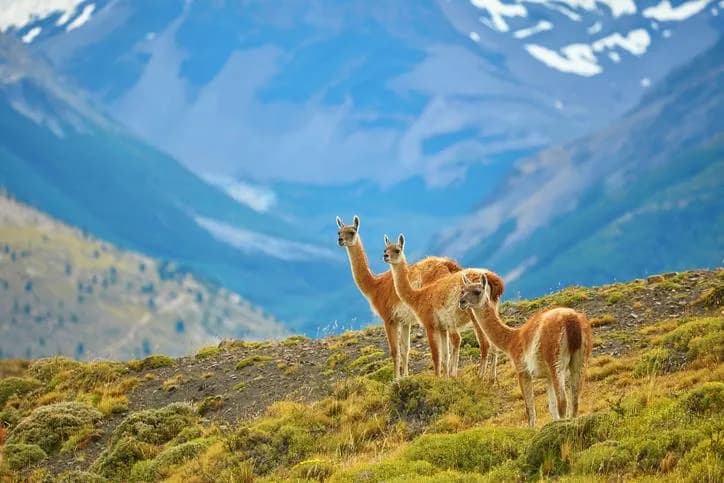
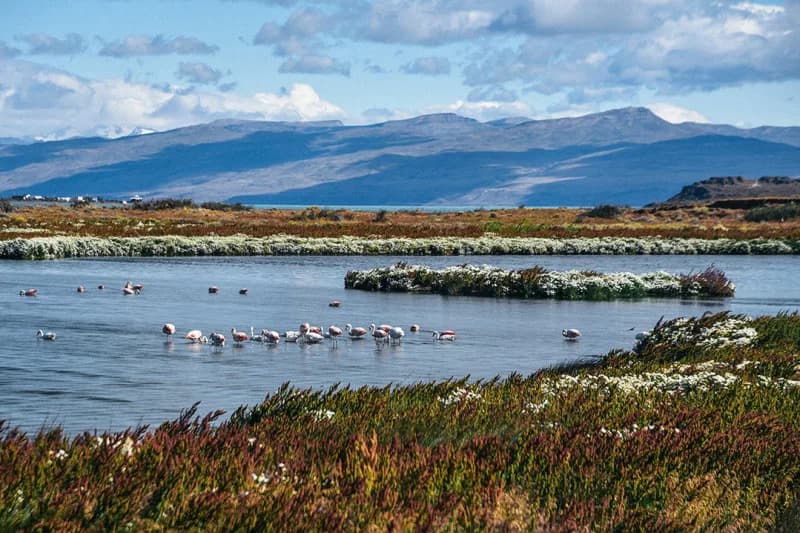
If there's one thing we love about living here, it's that you never have to go looking for nature: it shows up on its own. You leave town toward the glacier and there are already guanacos watching you from the steppe, a condor tracing circles high above, and a 15-minute walk from downtown, the flamingos of Laguna Nimez turning the water pink. In this guide we tell you what you'll really see —and what you won't, like the puma or the huemul, which are almost legend— in which season, and at which exact spot.
We'll be honest with you from the start, because that's why we live here: not all of Patagonia's famous animals roam near El Calafate. The whales of Península Valdés, the pumas of Torres del Paine or the Atlantic penguins are, in some cases, over a thousand kilometers away.
That's why we'd rather tell you plainly and clearly what you'll really see of Argentine Patagonia's flora and fauna when you visit El Calafate and Los Glaciares National Park, organized by the three landscapes you're bound to cross: the steppe, the Andean forest and the wetland. With the real probability of spotting each animal, in which season, and at which exact spot.
Why wildlife is so easy to see here
Los Glaciares National Park protects some 726,927 hectares —it's the largest park in Argentina's national system— and 145 bird species have been recorded within it (National Parks Administration; Inventario de las Aves del Parque Nacional Los Glaciares, Aves Argentinas/AOP–APN).
And you don't need to head deep into the wild to see it. One kilometer from the town center, the Laguna Nimez Nature Reserve holds a historical record of 132 bird species —over 10% of Argentina's entire avifauna— and you can walk there (lagunanimez.com). Patagonia has one of the lowest population densities on the planet, around 2 inhabitants per square kilometer, and it shows: here, quite literally, there are more guanacos than people.
Our favorite fact to share is about the huemul, the southernmost deer in the world. Only about 1,500 individuals remain between Argentina and Chile, roughly 1% of its original population (Fundación Rewilding Chile), and its southernmost population takes refuge precisely in the northern sector of Los Glaciares National Park. It's one of those species you probably won't see —we'll tell you that upfront— but that's worth understanding.
Three landscapes, three faunas: steppe, Andean forest and wetland
Before we get into each species, keep this mental map, because it's the most useful way to understand what you'll see:
The Patagonian steppe is all that yellowish, windswept land you see on the way to the glacier. Arid, open, covered in low shrubs. It's the kingdom of the guanaco, the lesser rhea and the condor high above.
The Andean Patagonian forest appears as you approach the mountains: the Perito Moreno boardwalks, the Magallanes Peninsula, Cerro Frías. Green, humid, made of lenga and ñire trees. That's where the woodpeckers, the austral parakeets and —with luck— the foxes live.
The wetland and the shores of Lago Argentino —Laguna Nimez, Bahía Redonda— are water and reeds. Home to the flamingos, the black-necked swans and dozens of ducks.
Almost everything that follows lives across Santa Cruz and much of Argentine Patagonia, but what we're telling you is where we see it, here.
Mammals of Patagonia
Guanaco (Lama guanicoe)
The emblem of the steppe and the one you're guaranteed to see. The guanaco is the llama's wild relative — elegant, curious, roaming in groups all over the steppe on the road to Perito Moreno (RP 11) and, in huge numbers, in Torres del Paine. In summer you'll see the babies, the chulengos, scampering near their mothers. Sighting probability: high, year-round. It's listed as Least Concern by the IUCN.
Puma (Puma concolor)
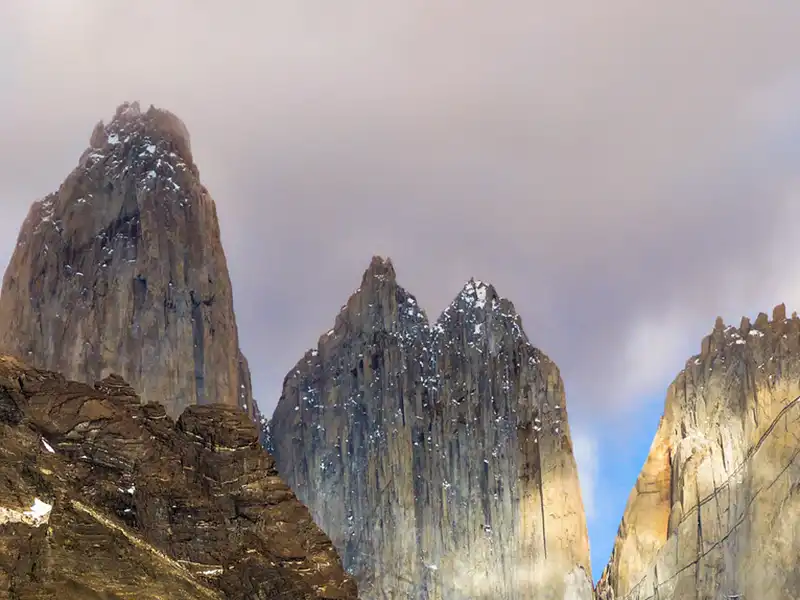
Let's be honest: the puma inhabits the whole region, but it's a ghost. Seeing one near El Calafate is exceptional. The world's puma hotspot is Torres del Paine, and even there, on a full-day trip from El Calafate, spotting one is still a matter of luck: near-guaranteed sightings require dedicated multi-day tracking tours. It poses no danger to tourists in the areas you'll be visiting.
Culpeo fox (Lycalopex culpaeus) and South American gray fox (Lycalopex griseus)
The two Patagonian foxes. The culpeo (red fox) is larger with reddish tones; the gray fox (or chilla) is smaller and shyer. You'll come across them on the steppe, at the forest edges and sometimes —the culpeo especially— near the glacier boardwalks. Probability: medium, best at dawn or dusk.
No matter how tame they seem, don't feed the foxes. They get used to human food, lose their fear, and it ends badly for them: they approach the roads and stop hunting. Take your photos from a distance and leave it at that.
Armadillos and skunks
The steppe hides several armored diggers: the pichi (Zaedyus pichiy), a small armadillo that hibernates in winter; the big hairy armadillo (Chaetophractus villosus); and the Humboldt's hog-nosed skunk (Conepatus humboldtii), which you often smell before you see. Probability: low, mostly from spring through autumn.
European hare (Lepus europaeus)
If you see a large hare crossing the road, don't be fooled: it's an introduced species, not native fauna. You'll see it everywhere, but it's worth knowing it's not part of the steppe's original ecosystem.
Huemul (Hippocamelus bisulcus)
The treasure. It's the southernmost deer on the planet and it's Endangered (IUCN). Its southernmost population takes refuge in the northern sector of Los Glaciares National Park, in the El Chaltén area — not on the Perito Moreno circuit. Seeing one is exceptional, but if your trip includes a getaway to the park's northern sector —also home to the Laguna de los Tres trek— it's worth knowing you're in the last refuge of a species that even appears on Chile's national coat of arms.
Birds of Patagonia: a quick spotting guide
If you're coming "for the animals," you're really coming mostly for the birds: they're the ones you'll see for sure, and up close. This is our quick guide to the most asked-about species.
Andean condor (Vultur gryphus)
The largest flying bird in the world by combined weight and wingspan: up to 3.3 meters tip to tip. Watching one soar is one of those things you never forget. The best spots around El Calafate are Cerro Frías and Cerro Huyliche —where the 4x4 trips to the Balconies of El Calafate go— and the steppe. It's listed as Near Threatened globally and Vulnerable in Argentina.
For condors, timing is everything: go mid-morning, when the sun warms the slopes and the thermals they ride form. Early morning or under overcast skies, your chances drop sharply.
Chilean flamingo (Phoenicopterus chilensis)
Yes, there are flamingos in Patagonia, and you don't need to go far: they're seen at Laguna Nimez and from the Bahía Redonda waterfront. The peak runs from October to March, though some stay even in winter, standing on the bay's ice. Probability: high in season. It's also Near Threatened globally and Vulnerable in Argentina, so seeing them in numbers is a privilege. All the details on visiting are in our complete Laguna Nimez guide.
Black-necked swan, upland geese and wetland birds
The black-necked swan (Cygnus melancoryphus) is another classic of Nimez and Bahía Redonda — supremely elegant. Add the upland geese (Chloephaga spp., the Patagonian "goose"), the black-faced ibis, the southern lapwing and several ducks. Laguna Nimez is, hands down, the best place to see all of this within walking distance of downtown. Probability: medium-high, especially in spring and summer.
Lesser rhea, black-chested buzzard-eagle and steppe raptors
The lesser rhea or Darwin's rhea (Rhea pennata) is the great runner of the steppe: you'll see it on the way to the glacier, often with its chicks trailing in single file. Above reign the black-chested buzzard-eagle (Geranoaetus melanoleucus), the southern caracara and the chimango. Probability: medium, year-round.
Forest birds: Magellanic woodpecker and austral parakeet
In the lenga forest by the glacier boardwalks and on Cerro Frías, listen before you look: the Magellanic woodpecker (Campephilus magellanicus), South America's largest, gives itself away with its "tap-tap" against the trunks. The male has an entirely red head. It's joined by the austral parakeet (Enicognathus ferrugineus), the world's southernmost parrot, flying in noisy flocks. Probability for both: medium.
Flora by habitat
Patagonian flora is the kind you have to learn to look at: it's not lush, it's resilient. And once you understand it, the landscape becomes much richer.
Steppe: why it's so arid
The steppe you cross on the way to the glacier is yellowish and low for a concrete reason: the rain shadow of the Andes. Clouds drop almost all their moisture on the Chilean side of the range and arrive dry on this side. That's why the dominant plants are coirón (the tough bunch grasses), mata negra, neneo and other spiny, deep-rooted shrubs. All built to withstand wind and drought.
Andean forest: lenga, ñire and the colors of autumn
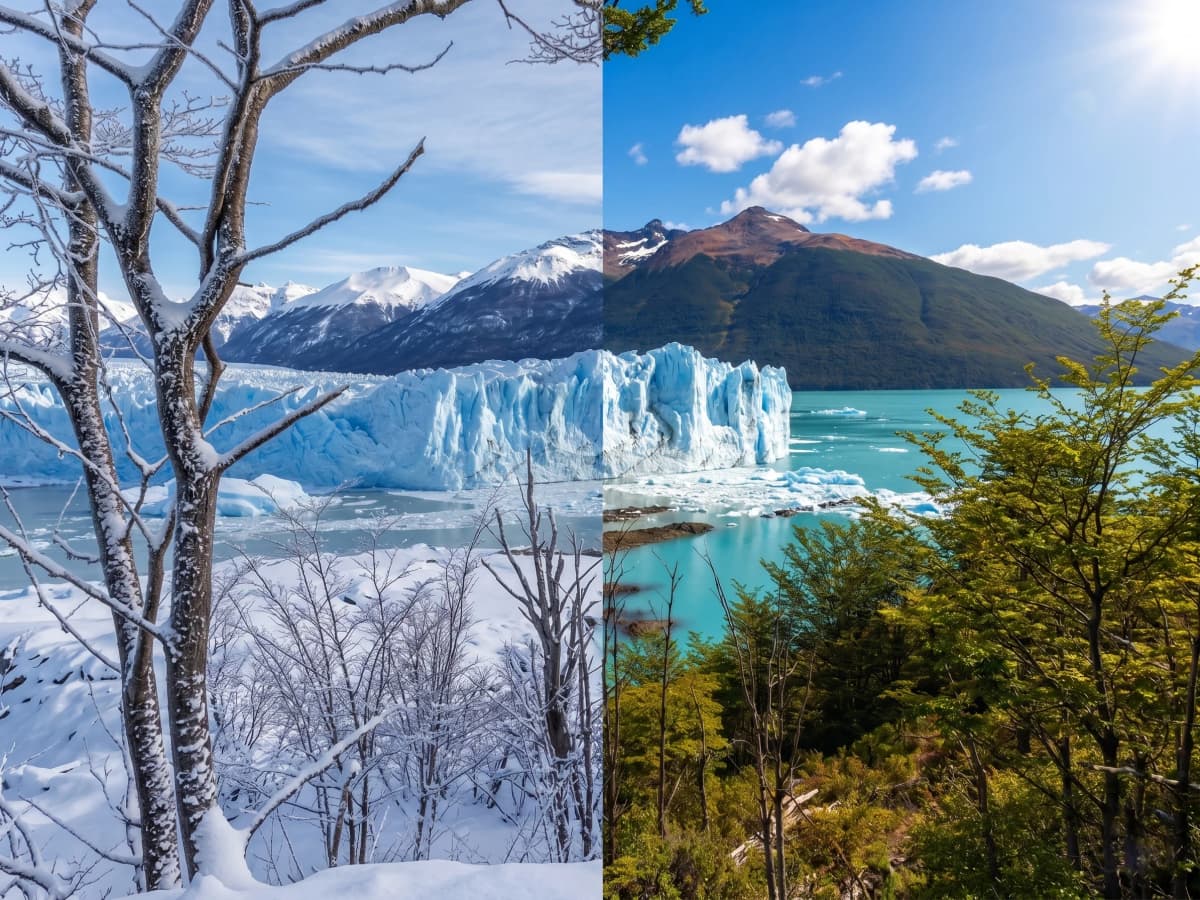
As you approach the mountains, the forest of lenga (Nothofagus pumilio) and ñire (Nothofagus antarctica) appears — the southern "beeches" — along with the guindo or Magellan's coigüe. If you come in April, this forest is the show: the lenga and ñire turn intense reds, oranges and yellows before dropping their leaves. Also look for the notro or Chilean firebush (Embothrium coccineum), which bursts into red flowers in spring and summer, and the beards of lichen hanging from the branches — a sign of ultra-pure air.
Wetlands and the shores of Lago Argentino
Along the edges of Laguna Nimez and Bahía Redonda everything changes: reed beds and marsh vegetation that feed and shelter the entire community of waterbirds. It's the smallest habitat in area but the densest in life you'll see from town.
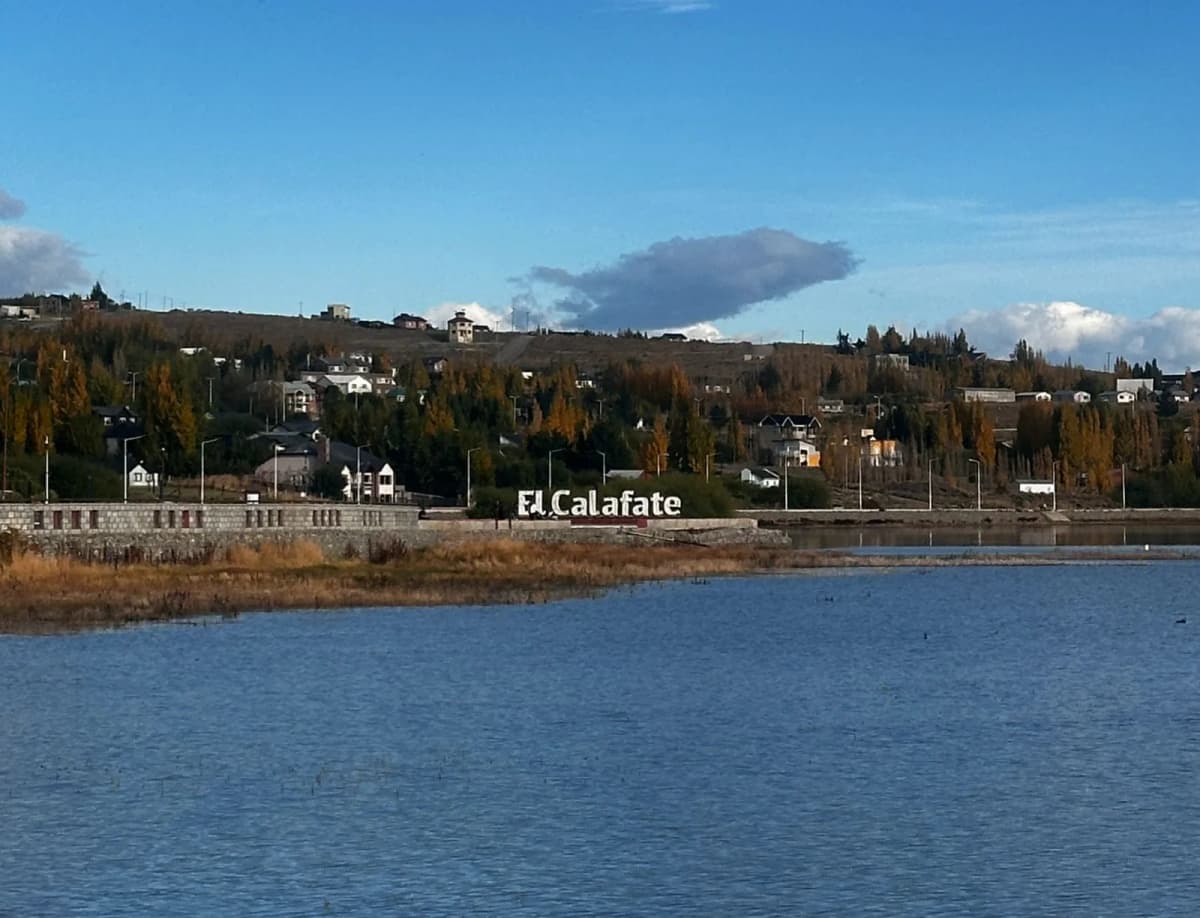
The calafate: the plant that named the town
You can't leave without getting to know the shrub the town was named after. The calafate (Berberis microphylla) is a spiny shrub up to a meter and a half tall, with golden-yellow flowers in spring and a dark-blue, bittersweet berry similar to a blueberry that ripens in midsummer (December to March). It's eaten fresh or in jams, ice cream and liqueurs —try a "calafate sour" if you can—.
And then there's the legend, of course: Tehuelche versions tell of a young woman (or an old healer) transformed into this spiny, golden-flowered shrub, and that's where the saying you'll hear on every corner comes from: "whoever eats calafate always comes back" (El Calafate Tourism Office).
Where to see it all: the local spotting map
This is the table we reach for when travelers ask us at the counter, built from years of living here:
| Place | What you see | When | Access |
|---|---|---|---|
| Laguna Nimez Reserve | Chilean flamingo, black-necked swan, ducks, ibises, lapwings | Oct–Mar (peak); sunset | General admission ARS $12,000; cash only, in pesos. Flat 3 km trail |
| Waterfront / Bahía Redonda | Flamingos and swans from the shore | Oct–Mar; partial in winter | Free, walkable from downtown |
| Steppe along RP 11 (glacier road) | Guanacos, lesser rheas, condors, buzzard-eagle | Year-round | On the way to Perito Moreno |
| Glacier boardwalks / Magallanes Peninsula | Lenga forest, parakeets, woodpecker, foxes | Year-round | With Los Glaciares NP entrance |
| Cerro Frías / Huyliche (Balconies) | Condors, buzzard-eagle | Year-round; mid-morning | 4x4 excursion |
| Estancias (ranch day) | Steppe fauna + rural history | Spring–autumn | Estancia day trip |
| Lago Argentino boat trip | Waterbirds, cormorants | Year-round | Todo Glaciares |
| Torres del Paine (full day) | Guanacos in numbers, condors; puma (exceptional) | Year-round | Full day from El Calafate |
Excursion prices subject to season; the Laguna Nimez fee is the 2026 rate.
Several of these spots are covered by the classic excursions: you'll find them all laid out in our guide to outdoor activities in El Calafate.
Seasons: when to see what
Wildlife and flora follow their own calendar, worth cross-checking with the best time to visit El Calafate:
Spring (Oct–Dec): the calafate blooms, migratory birds arrive, guanaco chulengos are born. The wetland fills with life. The best season for wildlife overall.
Summer (Jan–Mar): the calafate berry ripens, peak activity at Laguna Nimez, endlessly long days for watching. Flamingo peak.
Autumn (Apr–May): the lenga and ñire forest turns red and orange. A flora spectacle. Migratory birds begin to leave.
Winter (Jun–Sep): fewer birds, but it surprises you: a good share of the flamingos stay on the ice of Bahía Redonda. If you're coming in this season, also check our winter vs summer comparison.
In short
If you come to El Calafate craving nature, you won't leave empty-handed: guanacos, condors and flamingos are practically guaranteed if you know where and when to look. The puma and the huemul are for the dreamers —and it's fine to dream them—. What matters is understanding that each landscape has its own cast, and that often the best of it is a few meters from town or on the road to a glacier.
Coming mainly for the wildlife? Write to us and we'll build your route around what you most want to see: if it's condors, we start with the 4x4 Balconies trip; if it's guanacos and open landscapes, the Torres del Paine full day or an estancia day. We're locals: we tell you what you'll actually see.
Frequently asked questions
The most common questions about the flora and fauna of El Calafate and southern Patagonia.